A Mother's Story
Each December, I vowed to make Christmas a calm and peaceful experience. I had cut back on nonessential obligations - extensive card writing, endless baking, decorating and even overspending. Yet, still, I found myself exhausted, unable to appreciate the precious family moments and of course, the true meaning of Christmas.
My son, Nicholas, was in kindergarten that year. It was an exciting season for a six year old. For weeks, he'd been memorizing songs for his school's Winter Pageant. I didn't have the heart to tell him I'd be working the night of the production. Unwilling to miss his shining moment, I spoke withhis teacher. She assured me there'd be a dress rehearsal the morning of the presentation. All Parents unable to attend that evening were welcome to come then. Fortunately, Nicholas seemed happy with the compromise.
So, the morning of the dress rehearsal, I filed in ten minutes early, found a spot on the cafeteria floor and sat down. Around the room, I saw several other parents quietly scampering to their seats. As I waited, the students were led into the room. Each class,accompanied by their teacher, sat cross-legged on the floor. Then, each group, oneby one, rose to perform their song.Because the public school system had long stoppedreferring to the holiday as Christmas, I didn't expect anything other than fun commercial entertainment - songs of reindeer, Santa Claus, snowflakes and good cheer.So, when my son's class rose to sing, Christmas Love, I was slightly taken aback by its bold title.
Nicholas was aglow, as were all of his classmates, adorned in fuzzy mittens, red sweaters and bright snowcaps upon their heads. Those in the front row - center stage -held up large letters, one by one, to spell out the title of the song. As the class would sing C is for Christmas, a child would hold up the letter C. Then, H is for Happy, and on and on, until eachchild holding up his portion had presented the complete message, Christmas Love.
The performance was going smoothly, until suddenly,we noticed a small, quiet girl in the front row holding the letter M upside down - totally unaware her letter M appeared as a W. The audienceof the 1st through 6th graders snickered at this little one's mistake, but she had no idea they were laughing at her, so she stood tall, proudly holding her W.
Although many teachers tried to shush the children, the laughter continued until the last letter was raised, and we all saw it together. A hush can over the audience and eyes began to widen. In an instant, we understood the reason we were there, why we celebrated the holiday in the first place, why even in the chaos, there was a purpose for our festivities
For when the last letter was held high, the messageread loud and clear:
C H R I S T W A S L O V E
And I believe, he still is. Amazed in His presence...humbled by His Love...
Blessing for this Christmas time and for the New Year to Come!
Make His love shine this Christmas
Monday, December 19, 2005
1 Corinthian 13 Christmas
If I decorate my house perfectly with plaid bows, Strands of twinkling lights and shiny balls, but do not show love to my family, I'm just another decorator.
If I slave away in the kitchen, baking dozens of Christmas cookies, preparing gourmet meals and arranging a beautifully adorned table at mealtime, but do not show love to my family, I'm just another cook.
If I work at the soup kitchen, carol in the nursing home And give all that I have to charity,But do not show love to my family, It profits me nothing.
If I trim the spruce with shimmering angels and crocheted snowflakes, attend a myriad of holiday parties and sing in the choir's cantata, but do not focus on Christ, I have missed the point.
Love stops the cooking to hug the child.
Love sets aside the decorating to kiss the husband.
Love is kind, though harried and tired.
Love doesn't envy another's home that has coordinated Christmas china and table linens. Love doesn't yell at the kids to get out of the way, but thanks God they are in the way.
Love doesn't give only to those who give in return, but rejoices in giving to those who can't.
Love bears all things, believes all things, hopes all things, endures all things.
Love never fails.
Video games will break, pearl necklaces will be lost, golf clubs will rust...but the gift of love will endure.
You can give without loving, but you cannot love without giving
If I decorate my house perfectly with plaid bows, Strands of twinkling lights and shiny balls, but do not show love to my family, I'm just another decorator.
If I slave away in the kitchen, baking dozens of Christmas cookies, preparing gourmet meals and arranging a beautifully adorned table at mealtime, but do not show love to my family, I'm just another cook.
If I work at the soup kitchen, carol in the nursing home And give all that I have to charity,But do not show love to my family, It profits me nothing.
If I trim the spruce with shimmering angels and crocheted snowflakes, attend a myriad of holiday parties and sing in the choir's cantata, but do not focus on Christ, I have missed the point.
Love stops the cooking to hug the child.
Love sets aside the decorating to kiss the husband.
Love is kind, though harried and tired.
Love doesn't envy another's home that has coordinated Christmas china and table linens. Love doesn't yell at the kids to get out of the way, but thanks God they are in the way.
Love doesn't give only to those who give in return, but rejoices in giving to those who can't.
Love bears all things, believes all things, hopes all things, endures all things.
Love never fails.
Video games will break, pearl necklaces will be lost, golf clubs will rust...but the gift of love will endure.
You can give without loving, but you cannot love without giving
The Psychological Profile of Radical Liberals
Some people say that there has been little research done on the traits of liberals--but they must have overlooked this article in Clio Psych's Journal from 2003. Here is an excerpt from the article that mentioned research on liberals from 1982.
In the 1970s, Stanley Rothman and Robert Lichter administered Thematic Apperception Tests to a large sample of "new left" radicals (Roots of Radicalism, 1982). They found that activists were characterized by weakened self-esteem, injured narcissism and paranoid tendencies. They were preoccupied with power and attracted to radical ideologies that offered clear and unambiguous answers to their questions. All of these traits can be found in the work of Chomsky and other anti-imperialist intellectuals.And if you ever wondered why some liberals seem wishy-washy at times--this paragraph from the same article might explain things:
The unwillingness to offer alternatives reveals a lack of self-confidence and self-esteem. If they offered their own policy ideas they would be vulnerable to criticism. They would run the risk that their ideas would fail, or would not seem persuasive to others. This is especially difficult for anti-capitalists after the fall of the Soviet Union. It has also been difficult in the war against terrorism because Saddam Hussein and Osama bin Laden are such unsympathetic figures. Psychologically, it is easier to blame America for not finding a solution than it is to put one's own ideas on the line.
Is this why the Left Wing is so critical of the United States yet they have no positive vision for our future?
Some people say that there has been little research done on the traits of liberals--but they must have overlooked this article in Clio Psych's Journal from 2003. Here is an excerpt from the article that mentioned research on liberals from 1982.
In the 1970s, Stanley Rothman and Robert Lichter administered Thematic Apperception Tests to a large sample of "new left" radicals (Roots of Radicalism, 1982). They found that activists were characterized by weakened self-esteem, injured narcissism and paranoid tendencies. They were preoccupied with power and attracted to radical ideologies that offered clear and unambiguous answers to their questions. All of these traits can be found in the work of Chomsky and other anti-imperialist intellectuals.And if you ever wondered why some liberals seem wishy-washy at times--this paragraph from the same article might explain things:
The unwillingness to offer alternatives reveals a lack of self-confidence and self-esteem. If they offered their own policy ideas they would be vulnerable to criticism. They would run the risk that their ideas would fail, or would not seem persuasive to others. This is especially difficult for anti-capitalists after the fall of the Soviet Union. It has also been difficult in the war against terrorism because Saddam Hussein and Osama bin Laden are such unsympathetic figures. Psychologically, it is easier to blame America for not finding a solution than it is to put one's own ideas on the line.
Is this why the Left Wing is so critical of the United States yet they have no positive vision for our future?
The Irony of Gods Grace
I came sneaking into trusting God instead of my works camp with heels dug in and mind closed. I was reared to think that I was pretty much responsible for my health and welfare as well as that of my friends and family. I lived in a chronic state of anxiety, fearful that I might screw up and miss Gods will. I was later relieved to discover that it is much harder to miss God's will than I had always thought.
I seemed to have concluded as a young man that I could thwart God's plan about anytime I wanted. I could rebelliously choose the wrong woman to marry and produce a bunch of pagans, refuse to witness and send all kinds of people to hell, take a drink of beer and offend people so badly that they lost their salvation, forget to pray and cause a disaster, and; you get the picture. As a result I became sad, depressive, nervous and tried to be SERIOUS about Christianity.
The sermons I heard all pointed toward being very religious because that was the Kind of man God chooses.Then I started to read, really read the Bible. For example, the Christmas story in Matthew stunned me. The genealogy of Jesus was a mess. All those people who fouled up the lineage of the Messiah could and should have kept God from accomplishing His will.
For example, there are four very unusual women in a male line up. How can that be when we know that God only chooses and uses men. I always heard it was special men, holy men, strong men, fighting men who never sinned that God uses.
And, those women were not very pure and holy. Tamar seduced her father-in-law. Yuck! That has to be worse than pornography and we all know that once you pick up a Playboy you are ruined for God's service forever. God wanted you to someday go to Asia as a missionary but now you are damaged goods and He will have to reject you forever. The kind of man or woman God uses God uses is always sexually pure.
Then there is a gal named Rahab. Wow! She was a madam and lived in the red light district of the town. What a loser. What was God doing choosing her to hide the spies and liberate the Holy Land? Then, God wrote it all down and flaunted it in the Bible. Did He not realize what kind of message He was sending to the community? But here she is, listed as one of the ancestors of Jesus, the Messiah of the world.
The third woman may even be worse than these two. The infamous Bathsheba wantonly seduced David who was a real good guy until then. He was solely after God's heart before she came into the picture. Then that devil with a blue dress on-or off- got hold of him and made him fall. Then she made him murder her husband, one of his greatest friends and supporters, Uriah.
If I were to continue to believe those past sermons she could have stopped God dead in His tracks because the Messiah was to be a Son of David.What was I to conclude? Maybe I was wrong and God could accomplish His purposes through fallen, frail, broken, fleshly men and women? All these women were not only serial sinners they were Gentiles. God continually warned the Hebrew children not to get involved with Gentile women yet these women are all non Jewish. Why not mention Sarah, Rebecca and Samuels mother if He wanted to honor Jewish female heroes?
But these women are not even racially pure let alone sexually pure. How could God have allowed those good Hebrew men to get together with Gentiles and pollute the gene pool and spiritual DNA? Surely the Messiah could not arrive out of such a sinful genealogy.
Even in the Christmas story God decided to use an old woman, Elizabeth and her doubting, elderly husband to bring John the Baptist into the Doesn't. Doesnt God not know that old people donÂ?t make very good parents? They are usually out of touch with the contemporary times and have kids that reject them. The boy John The Baptist might end up with ADHD or something worse. As a matter of fact John did develop a confrontational personality and go around telling people to repent.
And how about the old priest, Zechariah? He had been praying for years for a baby but it is obvious why God did not answer his prayers. He had no faith. Anyone tlistenedr listend to Copeland knows that. Our faith must be pure and unwavering to get an answer. He even argued with the angel sent to him. But then God went on anyway and told him to keep trying because he and Elizabeth would produce one even if it required a miracle. But old Zechariah still was a doubter and the Angel had to strike him dumb to teach him a lesson. What kind of inspiration is that for us holy non-doubters?
Then take a look at Mary. She was just a kid. We have a lot of statistics today about the problems of babies having babies. And she was not married. That is not really very good for the Messiahs reputation.
To top it all off, Joseph, not Mary, was the son of David. So the Messiahs Davidic lineage came though his adoptive father not through the bloodline. An adopted Messiah? Adoption was not looked upon with great favor back then. What was God thinking?
What kind of men and women did God choose to bring the Messiah to the world? I was struck by how many weak and irresponsible people God chose to bring the Messiah to earth. A small light began to come on in my head. I now see that my own sinful condition was a tunnel not a cave. It is not a dead end. There is light at the end of the tunnel. There is hope even for me and for sinners like me. There is even hope for you guys!
I am not in charge of God's will. I cannot thwart it at anytime I want. I am somehow part of that humongous plan of His even when I do not know it or know how it works. Gods plan marches on with sovereign surety and hope for the world. God is in charge. My imperfection and sin has already been taken into account and He will certainly accomplish His goal despite my stumbling and failures.
I came to a new conclusion: It is not the KIND OF MAN THAT GOD CHOOSES that is so important but THE KIND OF GOD THAT MAN CHOOSES.
Now I believe in a big God, a sovereign God and a gracious God. When I believed in a small God whose will was only accomplished when I cooperated and went along with Him, it was all about me. Then I got full of pride and self-importance. Unfortunately, that led me to sadness, false guilt, depression and anxiety.
Back then I was consumed with what ifs and if onlys. What if I somehow unknowingly failed to follow through? What if I fail to teach my kids right? Or Forget to evangelize? Or not say Yes to God, etc. I was exhausted. Being in charge of the Messiahs mission is hard work. MY PERFECTIONISM WAS IMPERFECT.
I read books about "Finding God's Will" and anxiously tried to be "In the center of God's will" but that made anxious anxious.Then it hit me. Missing God's will is hard, it may be impossible.
Recognizing that God even uses my weaknesses, my folly, my failures and my fears brings me joy and humility. It may take a few hundred years but the lord of the Universe is also Lord of my life and He will make all things work out according to His will. Now Romans 8 makes sense. All things do work together for good.
God's sovereign plan is like riding in the waters of a huge, white-water river whose force keeps pushing me toward His end goal. I may thrash around and fight the water and pull myself toward one shore or another and think how great and powerful I am to be in control of my swimming. But from God's perspective I am always flowing in the ultimate deternaln of His eteranl plan. I am sure He is trying to say, Just rest in me, Gary. The members of A. A. say it this way: Let go and let God.
I still get have occasional anger that I am so needy and weak. That I still stumble and fall. That God has to rescue me from myself again and again. I am 67 and have been a Christian since age 10. After 57 years I should be holier and better. But I am not.
So, I just try to walk in the Holy Spirit, apply God's truth and set myself aside with God's Spirit so I can love God and fully enjoy Him forever. This, I think, is the basis of FREEDOM.
Sometimes I regress back into works righteousness and get legalistic or words righteousness and get perfectionist about how I speak and the names I give to the Trinity or get back into name it and claim it, blab it and grab it. Then I can once again feel the pride and satisfaction of thinking I am really in charge of the universe. Unfortunately, I just do not have the constitution for it. I wear out too easily. I admire my Grandmother who kept holiness alive for 90 years. Now that woman had a strong constitution. But me, I am weak and have to believe that God is in charge so I can rest in Him.
So, Let the river flow! It is never too late to turn our life over to His care and control.
Ps I Gary R. Sweeten, do hereby resign from being lord of the Universe and hereafter promise to allow God to rule. (At least most of the time.)
I came sneaking into trusting God instead of my works camp with heels dug in and mind closed. I was reared to think that I was pretty much responsible for my health and welfare as well as that of my friends and family. I lived in a chronic state of anxiety, fearful that I might screw up and miss Gods will. I was later relieved to discover that it is much harder to miss God's will than I had always thought.
I seemed to have concluded as a young man that I could thwart God's plan about anytime I wanted. I could rebelliously choose the wrong woman to marry and produce a bunch of pagans, refuse to witness and send all kinds of people to hell, take a drink of beer and offend people so badly that they lost their salvation, forget to pray and cause a disaster, and; you get the picture. As a result I became sad, depressive, nervous and tried to be SERIOUS about Christianity.
The sermons I heard all pointed toward being very religious because that was the Kind of man God chooses.Then I started to read, really read the Bible. For example, the Christmas story in Matthew stunned me. The genealogy of Jesus was a mess. All those people who fouled up the lineage of the Messiah could and should have kept God from accomplishing His will.
For example, there are four very unusual women in a male line up. How can that be when we know that God only chooses and uses men. I always heard it was special men, holy men, strong men, fighting men who never sinned that God uses.
And, those women were not very pure and holy. Tamar seduced her father-in-law. Yuck! That has to be worse than pornography and we all know that once you pick up a Playboy you are ruined for God's service forever. God wanted you to someday go to Asia as a missionary but now you are damaged goods and He will have to reject you forever. The kind of man or woman God uses God uses is always sexually pure.
Then there is a gal named Rahab. Wow! She was a madam and lived in the red light district of the town. What a loser. What was God doing choosing her to hide the spies and liberate the Holy Land? Then, God wrote it all down and flaunted it in the Bible. Did He not realize what kind of message He was sending to the community? But here she is, listed as one of the ancestors of Jesus, the Messiah of the world.
The third woman may even be worse than these two. The infamous Bathsheba wantonly seduced David who was a real good guy until then. He was solely after God's heart before she came into the picture. Then that devil with a blue dress on-or off- got hold of him and made him fall. Then she made him murder her husband, one of his greatest friends and supporters, Uriah.
If I were to continue to believe those past sermons she could have stopped God dead in His tracks because the Messiah was to be a Son of David.What was I to conclude? Maybe I was wrong and God could accomplish His purposes through fallen, frail, broken, fleshly men and women? All these women were not only serial sinners they were Gentiles. God continually warned the Hebrew children not to get involved with Gentile women yet these women are all non Jewish. Why not mention Sarah, Rebecca and Samuels mother if He wanted to honor Jewish female heroes?
But these women are not even racially pure let alone sexually pure. How could God have allowed those good Hebrew men to get together with Gentiles and pollute the gene pool and spiritual DNA? Surely the Messiah could not arrive out of such a sinful genealogy.
Even in the Christmas story God decided to use an old woman, Elizabeth and her doubting, elderly husband to bring John the Baptist into the Doesn't. Doesnt God not know that old people donÂ?t make very good parents? They are usually out of touch with the contemporary times and have kids that reject them. The boy John The Baptist might end up with ADHD or something worse. As a matter of fact John did develop a confrontational personality and go around telling people to repent.
And how about the old priest, Zechariah? He had been praying for years for a baby but it is obvious why God did not answer his prayers. He had no faith. Anyone tlistenedr listend to Copeland knows that. Our faith must be pure and unwavering to get an answer. He even argued with the angel sent to him. But then God went on anyway and told him to keep trying because he and Elizabeth would produce one even if it required a miracle. But old Zechariah still was a doubter and the Angel had to strike him dumb to teach him a lesson. What kind of inspiration is that for us holy non-doubters?
Then take a look at Mary. She was just a kid. We have a lot of statistics today about the problems of babies having babies. And she was not married. That is not really very good for the Messiahs reputation.
To top it all off, Joseph, not Mary, was the son of David. So the Messiahs Davidic lineage came though his adoptive father not through the bloodline. An adopted Messiah? Adoption was not looked upon with great favor back then. What was God thinking?
What kind of men and women did God choose to bring the Messiah to the world? I was struck by how many weak and irresponsible people God chose to bring the Messiah to earth. A small light began to come on in my head. I now see that my own sinful condition was a tunnel not a cave. It is not a dead end. There is light at the end of the tunnel. There is hope even for me and for sinners like me. There is even hope for you guys!
I am not in charge of God's will. I cannot thwart it at anytime I want. I am somehow part of that humongous plan of His even when I do not know it or know how it works. Gods plan marches on with sovereign surety and hope for the world. God is in charge. My imperfection and sin has already been taken into account and He will certainly accomplish His goal despite my stumbling and failures.
I came to a new conclusion: It is not the KIND OF MAN THAT GOD CHOOSES that is so important but THE KIND OF GOD THAT MAN CHOOSES.
Now I believe in a big God, a sovereign God and a gracious God. When I believed in a small God whose will was only accomplished when I cooperated and went along with Him, it was all about me. Then I got full of pride and self-importance. Unfortunately, that led me to sadness, false guilt, depression and anxiety.
Back then I was consumed with what ifs and if onlys. What if I somehow unknowingly failed to follow through? What if I fail to teach my kids right? Or Forget to evangelize? Or not say Yes to God, etc. I was exhausted. Being in charge of the Messiahs mission is hard work. MY PERFECTIONISM WAS IMPERFECT.
I read books about "Finding God's Will" and anxiously tried to be "In the center of God's will" but that made anxious anxious.Then it hit me. Missing God's will is hard, it may be impossible.
Recognizing that God even uses my weaknesses, my folly, my failures and my fears brings me joy and humility. It may take a few hundred years but the lord of the Universe is also Lord of my life and He will make all things work out according to His will. Now Romans 8 makes sense. All things do work together for good.
God's sovereign plan is like riding in the waters of a huge, white-water river whose force keeps pushing me toward His end goal. I may thrash around and fight the water and pull myself toward one shore or another and think how great and powerful I am to be in control of my swimming. But from God's perspective I am always flowing in the ultimate deternaln of His eteranl plan. I am sure He is trying to say, Just rest in me, Gary. The members of A. A. say it this way: Let go and let God.
I still get have occasional anger that I am so needy and weak. That I still stumble and fall. That God has to rescue me from myself again and again. I am 67 and have been a Christian since age 10. After 57 years I should be holier and better. But I am not.
So, I just try to walk in the Holy Spirit, apply God's truth and set myself aside with God's Spirit so I can love God and fully enjoy Him forever. This, I think, is the basis of FREEDOM.
Sometimes I regress back into works righteousness and get legalistic or words righteousness and get perfectionist about how I speak and the names I give to the Trinity or get back into name it and claim it, blab it and grab it. Then I can once again feel the pride and satisfaction of thinking I am really in charge of the universe. Unfortunately, I just do not have the constitution for it. I wear out too easily. I admire my Grandmother who kept holiness alive for 90 years. Now that woman had a strong constitution. But me, I am weak and have to believe that God is in charge so I can rest in Him.
So, Let the river flow! It is never too late to turn our life over to His care and control.
Ps I Gary R. Sweeten, do hereby resign from being lord of the Universe and hereafter promise to allow God to rule. (At least most of the time.)
Saturday, December 17, 2005
Why So Much Alcoholism and Drug Abuse in Russia?
The stats about alcohol consumption in the USSR and now Russia are so astounding that most people do not believe them. Whole towns and villages in rural Russia are abandoned as "Ghost Towns" because the people died as a result of alcohol. Hundreds of people, especially males, drown each year as a result of falling drunk into the ponds, lakes and rivers while fishing.
The situation is especially bad for males. In some regions almost every single boy and man is drunk almost daily. When I took my daily walks around the small Moscow lakes last August almost every couple, both young and old, carried half quart bottles of beer with them as they pushed baby buggies and sat in the grass listening to portable radios. The appearance of MP 3 Players is just beginning.
But why is alcohol abuse so prevalent there? I have several theories but three stand out. First, the move away from God toward Communism has resulted in a chronic intergenerational law of generations that produces bitterness, anger, resentment and a loss of hope. (Read Isiah 28) The only cure is for a massive revival and confession of their sin by the Russian people.
Secondly, family life in Russia disentegrated as a result of the atheistic, paranoia of the Bolsheviks and father turned against children and children agaisnt parents. The state became supreme and massive numbers of people failed to keep the Commandment that says: "Honor your father and mother." The rates of premature deaths in Russia prove the consequences of failing to follow God's laws.
Third, and perhaps most directly related to male alcohol abuse, mothers tried to protect their sons from the brutality of the Communist state. The surest way for a male to lose his freedom and even his life was to be assertive and self-assured. Little boys are, by nature and by the development of testosterone, more hyperactive, assertive and agressive. THIS IS GOOD!!
Under Stalin and the other brutal dictators of the Socialist Republic any kind of masculine assertive indpendence was seen as a threat and severely punished by sending the men to prison or into one of the astoundingly brutal armed forces to "break his spirit". This led mothers to be naturally overprotective of their sons and they reacted strongly to any and all "Boyishness" such as fighting, rough housing and having fun.
Almost every male in Russia has a wounded spirit. In Colossians Three St. Paul wisely says, "Fathers do not exasperate your children and cause them to lose heart." When a boy has lost heart and has a wounded spirit he needs to be healed by interacting with older men who can help heal and restore hope. Without hope men and boys turn to alcohol to deaden their pain.
Here in America we are also seeing a war against boys. About 40% of all children are being reared in fatherless homes. About 75% of the time mothers get custody of the children in a divorce. Boys are flunking out of female oriented schools that discriminate against hyperactive boys. The feminanization of Christianity has led to 75% of church attendees being female.
The stats about alcohol consumption in the USSR and now Russia are so astounding that most people do not believe them. Whole towns and villages in rural Russia are abandoned as "Ghost Towns" because the people died as a result of alcohol. Hundreds of people, especially males, drown each year as a result of falling drunk into the ponds, lakes and rivers while fishing.
The situation is especially bad for males. In some regions almost every single boy and man is drunk almost daily. When I took my daily walks around the small Moscow lakes last August almost every couple, both young and old, carried half quart bottles of beer with them as they pushed baby buggies and sat in the grass listening to portable radios. The appearance of MP 3 Players is just beginning.
But why is alcohol abuse so prevalent there? I have several theories but three stand out. First, the move away from God toward Communism has resulted in a chronic intergenerational law of generations that produces bitterness, anger, resentment and a loss of hope. (Read Isiah 28) The only cure is for a massive revival and confession of their sin by the Russian people.
Secondly, family life in Russia disentegrated as a result of the atheistic, paranoia of the Bolsheviks and father turned against children and children agaisnt parents. The state became supreme and massive numbers of people failed to keep the Commandment that says: "Honor your father and mother." The rates of premature deaths in Russia prove the consequences of failing to follow God's laws.
Third, and perhaps most directly related to male alcohol abuse, mothers tried to protect their sons from the brutality of the Communist state. The surest way for a male to lose his freedom and even his life was to be assertive and self-assured. Little boys are, by nature and by the development of testosterone, more hyperactive, assertive and agressive. THIS IS GOOD!!
Under Stalin and the other brutal dictators of the Socialist Republic any kind of masculine assertive indpendence was seen as a threat and severely punished by sending the men to prison or into one of the astoundingly brutal armed forces to "break his spirit". This led mothers to be naturally overprotective of their sons and they reacted strongly to any and all "Boyishness" such as fighting, rough housing and having fun.
Almost every male in Russia has a wounded spirit. In Colossians Three St. Paul wisely says, "Fathers do not exasperate your children and cause them to lose heart." When a boy has lost heart and has a wounded spirit he needs to be healed by interacting with older men who can help heal and restore hope. Without hope men and boys turn to alcohol to deaden their pain.
Here in America we are also seeing a war against boys. About 40% of all children are being reared in fatherless homes. About 75% of the time mothers get custody of the children in a divorce. Boys are flunking out of female oriented schools that discriminate against hyperactive boys. The feminanization of Christianity has led to 75% of church attendees being female.
A War on Males?
Why does every section of society from the school room to the court room bristle with angry attacks on men while funding women's programs and women's health issues at an astounding rate? A great article in the Saturday, December 17 Wall Street Journal about the rampant discrimination against males in America brings the crisis strongly to our attention.
The author, Lionel Tiger, notes that 90% of the victims of Ritalin and similar drugs prescribed for schoolkids are boys; but even drugged they perform less well than girls. A 2005 study at Yale found nationally that even in prekindergarten boys are nearly five times more likely to be expelled than girls.
When it comes to health status, the disparity in favor of women is enhanced by such patterns as seven times more Federal expenditure on breast cancer than on the prostate variety. And no one is provoked into action because vaunted male patriarchs commit suicide between four and 10 times more frequently than oppressed and brainwashed women.
He suggests we all read a report by the New Hampshire Commission on the Status of Men (www.nh.gov/csm).
Mr. Tiger is author of "The Decline of Males" (St. Martin's, 1999).
Parents, schools and churches must address this issue and fast. Too many boys and men are ending up as alcoholics, victims of suicide and separated from their kids. I suggest that you also read Soft Patriarchs, New Men by Bradford Wilcox
Why does every section of society from the school room to the court room bristle with angry attacks on men while funding women's programs and women's health issues at an astounding rate? A great article in the Saturday, December 17 Wall Street Journal about the rampant discrimination against males in America brings the crisis strongly to our attention.
The author, Lionel Tiger, notes that 90% of the victims of Ritalin and similar drugs prescribed for schoolkids are boys; but even drugged they perform less well than girls. A 2005 study at Yale found nationally that even in prekindergarten boys are nearly five times more likely to be expelled than girls.
When it comes to health status, the disparity in favor of women is enhanced by such patterns as seven times more Federal expenditure on breast cancer than on the prostate variety. And no one is provoked into action because vaunted male patriarchs commit suicide between four and 10 times more frequently than oppressed and brainwashed women.
He suggests we all read a report by the New Hampshire Commission on the Status of Men (www.nh.gov/csm).
Mr. Tiger is author of "The Decline of Males" (St. Martin's, 1999).
Parents, schools and churches must address this issue and fast. Too many boys and men are ending up as alcoholics, victims of suicide and separated from their kids. I suggest that you also read Soft Patriarchs, New Men by Bradford Wilcox
Tuesday, December 13, 2005
Prayers Being Answered???
Moscow Today reports that president Putin is considering how to reduce the restrictions on Non-Governmental Organizations, NGO's. He gave in to pressure from U.S. Secretary of State Condi Rice and other world leaders.
If the Russian government were to restrict the ability of NGO's to receive money from abroad it would severely restrict our ability to support evangelism, healing and equipping the saints in the former USSR. Billions of dollars are sent annually to help support pastors, Bible schools, alcohol and drug treatment, churches, orphanages and evangelists.
We do not wish to make anyone dependent upon western finances but it is necessary to help support them as they get started and on their feet. The locals cannot fully support all these ministries---YET. However, in a few years they shall be fully operational and on their feet.
These NGO's are the hope of the future for Russia. Democracy cannot thrive without thousands of churches, small grous, neighborhood associations, etc.
Keep praying for the Lord to touch Mr. Putin's heart so he will take his hands off non-political NGO's and affirm our right to take them spiritual and financial support.
Moscow Today reports that president Putin is considering how to reduce the restrictions on Non-Governmental Organizations, NGO's. He gave in to pressure from U.S. Secretary of State Condi Rice and other world leaders.
If the Russian government were to restrict the ability of NGO's to receive money from abroad it would severely restrict our ability to support evangelism, healing and equipping the saints in the former USSR. Billions of dollars are sent annually to help support pastors, Bible schools, alcohol and drug treatment, churches, orphanages and evangelists.
We do not wish to make anyone dependent upon western finances but it is necessary to help support them as they get started and on their feet. The locals cannot fully support all these ministries---YET. However, in a few years they shall be fully operational and on their feet.
These NGO's are the hope of the future for Russia. Democracy cannot thrive without thousands of churches, small grous, neighborhood associations, etc.
Keep praying for the Lord to touch Mr. Putin's heart so he will take his hands off non-political NGO's and affirm our right to take them spiritual and financial support.
Sunday, December 11, 2005
Forbidden Again? Pray for Our Russian Friends
I learned to sincerely despise the Communist ways after listening to so many who were persecuted personally or came from families that were persecuted by Stalin, et al. The USSR hated God, hated Christmas, hated the church and hated anyone who had personal faith.
As a result, small church and home groups were outlawed as were Christmas celebrations, Christian marriages ceremonies and religious traditions. Putin is trying to return to those "Bad Old Days" by passing new laws banning Non-Governmental Groups. PRAY!

I learned to sincerely despise the Communist ways after listening to so many who were persecuted personally or came from families that were persecuted by Stalin, et al. The USSR hated God, hated Christmas, hated the church and hated anyone who had personal faith.
As a result, small church and home groups were outlawed as were Christmas celebrations, Christian marriages ceremonies and religious traditions. Putin is trying to return to those "Bad Old Days" by passing new laws banning Non-Governmental Groups. PRAY!


The Only Hope for Russia and the World
Several years ago a book entitled, Bowling Alone was published that struck a chord among lay and professionals alike. It said that the key to a healthy democracy was small groups of people who freely associate with each other around common topics of interest.
This group of men and women come together regularly to discuss how to spread that message to the struggling folks of the former USSR. They teach, train and encourage Christ centered groups in churches, prisons, homes, etc.

Several years ago a book entitled, Bowling Alone was published that struck a chord among lay and professionals alike. It said that the key to a healthy democracy was small groups of people who freely associate with each other around common topics of interest.
This group of men and women come together regularly to discuss how to spread that message to the struggling folks of the former USSR. They teach, train and encourage Christ centered groups in churches, prisons, homes, etc.
Saturday, December 10, 2005
Tallying Compassion
Everybody knows congregations do good work. Ram Cnaan tells us what it's worth.Interview by Agnieszka Tennant posted 02/11/2003
If the average North American congregation were to bill its community for the social services it provides, the tab would run about $184,000 per year. We've known that congregations help the needy. Now—thanks to a groundbreaking social-science study—we know just how much they do.
The source of this and other surprising findings is a study spearheaded by Ram A. Cnaan, published in his book The Invisible Caring Hand: American Congregations and the Provision of Welfare (New York University Press, 2002). Cnaan is an Israeli-born secular Jew who is professor of social work and founding director of the Program for the Study of Organized Religion and Social Work at the University of Pennsylvania. He talked with ct associate editor Agnieszka Tennant.
Did your study of congregations confirm the widely accepted notion that liberal churches provide more social services than do conservative churches?
No. When it comes to caring for the needy, groups with different core theologies—mainline or conservative—basically deal the same with people. They spend an equal amount of resources to serve the needy.
Were you surprised by that?
At first I was. And then I found that I'm not the only one. Christian Smith at Duke University also found similar things—that volunteers and volunteerism among mainline liberals and evangelical groups are the same. So I'm not totally off. When you get a finding that doesn't agree with the common convention, you assume that you are wrong. But I was delighted to find out that there are other people who find similar things.
What other discoveries stand out to you?
The biggest surprise is that it's really a norm for a congregation in America to provide social services. It took me awhile to find out how pervasive this norm is. The respondents said, "Of course, we're a congregation, so we [care for the needy]." No one even questions it. Sometimes they apologized to me. "You know, we're just a young congregation. We just started. We don't do much. We should have done more." Half the time they would ask me, "Can you tell me how we can do more of what we are doing?" And I would look at them and I would think, "You are asking me?" Nobody told me, "No, we cannot do it" or "It's not our job."
It's a major power for our society. We don't know exactly how many congregations there are nationwide, but even if you take a conservative number of 300,000, then there are 300,000 groups that assume that it's their responsibility to help people.
Not many congregations think of themselves as significant suppliers of social welfare. Why is that?
In talking with them, I found that things that they thought are not social programs really are social programs.
In the congregations' minds, social services were some big projects at least in collaboration with the government. For us, a social program or social service is something that they do in a consistent manner to help the needy. Sometimes they're offended if you call something a social program. Say I see a soup kitchen, and ask them, "So you have a food distribution program?" But they say, "No, that's not a program, that's only the men's group activity."
So the language is very important. When we meet with them, we give them a list of activities, asking if they're involved in them. After they see the list of activities that qualify as social services, they say, "Oh, that's what you mean. Yes, then we do have social programs."
Your research affirmed the efforts of clergy. In fact, you dedicate your book to them. Why?
Everybody expects clergy to be good people. So when they do the good thing, it's not being reported anywhere. When they do something bad, it's always reported. I followed The Philadelphia Inquirer's reporting on clergy. In the last two years, they made the front page only three times, and always in something negative.
But I see that hundreds of them are doing a wonderful job. Not every one of them is perfect. But on average, clergy give way more to society than they get from society. We don't appreciate them enough.
What kind of help do they need the most?
Among other things, there is a need for intermediaries—nonprofits that could give clergy training in the know-how that they don't learn in seminaries but are often expected to know, such as accounting and management.
Besides studying 251 American congregations, you also looked at 46 in Canada. What differences did you spot?
Canada doesn't have the diversity that we have. We have many more denominations and religions. The level of religion in Canada is about half of that in the United States. The behavior of congregations that we studied there was slightly mimicking that of the United States, but they did not have the impact that congregations are having here.
I travel a lot to Toronto, and on every corner there I see a donut shop. In Philadelphia, at every corner there is a congregation. We have in Philadelphia, a city of one million residents, 2,100 places of worship. It's way more, proportionately, than in any other country. We practice religion more and, don't forget, we pay for everything that is religious. In Europe, a lot of the money that goes to the churches comes from the state, directly or indirectly. In Canada, like in the U.S., the government doesn't pay for congregations. But Catholic schools, for example, are financed by the government. So the separation of church and state as we have is uniquely American.
Is evangelism one of the major reasons that churches provide services?
Not really—not even for the more evangelical-minded congregations. I was expecting them to be providing social services in order to persuade people to change their religion and become members. I can't tell you that this motivation doesn't exist. They really believe that transformation is the way to health. But they know that transformation is not something that you see immediately.
When you ask them, "What is your number one hope for the people you serve?" they'll tell you, "We want them to find Jesus in their lives." But I asked them, "Would you stop the service if they don't?" "Oh, no," they say, "this is what we'd like. But it's not a mandatory part." An overwhelming majority of congregations do it because to provide social services is for them to actualize their faith—to be good Christian people, good Muslims, good Jews.
What makes local religious communities particularly able to provide social services?
The proximity to the needs of people. They always tell me, "We know the people who are coming by name. We know when they're serious and what their specific needs are. If we think that's what they need, we can give them these services. If we think they need something else, we'll give them something else."
Government is limited. Government programs don't have the flexibility. A congregation can decide to give you one service and give me another service, and it's legal, and it's understood, and nobody can challenge it. The government has to give the same service to every citizen if the person is assumed to have the same eligibility.
It's major power when you can change the service you give based on the specific need of the person and match the response to the real need. Plus, congregations are significantly more trusted than government.
What is the government's strength in supplying such services?
Money—and the ability to tax or use other resources congregations don't have. It can make general policies that affect people on a large scale. Congregations are limited in their means and their awareness or research.
How would you like to see your findings used?
I was surprised by how little people know about the wonderful work that congregations are doing. I was hoping that by making this a public story, congregations would be more acceptable to foundations and other funders. There is a reluctance by many foundations to work with congregations. I find it almost criminal. I'd like to see religion and social services reconnected in terms of education—in seminaries and other higher institutions. For too many years, the two were separated, and there's a lot that the two can do together.
What's the message you hope your study will send to congregations?
Clergy and congregants should learn to be proud of what they are providing for others. No one else does it so happily and so on their own.
Copyright © 2003 Christianity Today. Click for reprint information.February 2003, Vol. 47, No. 2, Page 56
The truth about congregational leadership and service needs to get out to educate people about true Christian values.
Everybody knows congregations do good work. Ram Cnaan tells us what it's worth.Interview by Agnieszka Tennant posted 02/11/2003
If the average North American congregation were to bill its community for the social services it provides, the tab would run about $184,000 per year. We've known that congregations help the needy. Now—thanks to a groundbreaking social-science study—we know just how much they do.
The source of this and other surprising findings is a study spearheaded by Ram A. Cnaan, published in his book The Invisible Caring Hand: American Congregations and the Provision of Welfare (New York University Press, 2002). Cnaan is an Israeli-born secular Jew who is professor of social work and founding director of the Program for the Study of Organized Religion and Social Work at the University of Pennsylvania. He talked with ct associate editor Agnieszka Tennant.
Did your study of congregations confirm the widely accepted notion that liberal churches provide more social services than do conservative churches?
No. When it comes to caring for the needy, groups with different core theologies—mainline or conservative—basically deal the same with people. They spend an equal amount of resources to serve the needy.
Were you surprised by that?
At first I was. And then I found that I'm not the only one. Christian Smith at Duke University also found similar things—that volunteers and volunteerism among mainline liberals and evangelical groups are the same. So I'm not totally off. When you get a finding that doesn't agree with the common convention, you assume that you are wrong. But I was delighted to find out that there are other people who find similar things.
What other discoveries stand out to you?
The biggest surprise is that it's really a norm for a congregation in America to provide social services. It took me awhile to find out how pervasive this norm is. The respondents said, "Of course, we're a congregation, so we [care for the needy]." No one even questions it. Sometimes they apologized to me. "You know, we're just a young congregation. We just started. We don't do much. We should have done more." Half the time they would ask me, "Can you tell me how we can do more of what we are doing?" And I would look at them and I would think, "You are asking me?" Nobody told me, "No, we cannot do it" or "It's not our job."
It's a major power for our society. We don't know exactly how many congregations there are nationwide, but even if you take a conservative number of 300,000, then there are 300,000 groups that assume that it's their responsibility to help people.
Not many congregations think of themselves as significant suppliers of social welfare. Why is that?
In talking with them, I found that things that they thought are not social programs really are social programs.
In the congregations' minds, social services were some big projects at least in collaboration with the government. For us, a social program or social service is something that they do in a consistent manner to help the needy. Sometimes they're offended if you call something a social program. Say I see a soup kitchen, and ask them, "So you have a food distribution program?" But they say, "No, that's not a program, that's only the men's group activity."
So the language is very important. When we meet with them, we give them a list of activities, asking if they're involved in them. After they see the list of activities that qualify as social services, they say, "Oh, that's what you mean. Yes, then we do have social programs."
Your research affirmed the efforts of clergy. In fact, you dedicate your book to them. Why?
Everybody expects clergy to be good people. So when they do the good thing, it's not being reported anywhere. When they do something bad, it's always reported. I followed The Philadelphia Inquirer's reporting on clergy. In the last two years, they made the front page only three times, and always in something negative.
But I see that hundreds of them are doing a wonderful job. Not every one of them is perfect. But on average, clergy give way more to society than they get from society. We don't appreciate them enough.
What kind of help do they need the most?
Among other things, there is a need for intermediaries—nonprofits that could give clergy training in the know-how that they don't learn in seminaries but are often expected to know, such as accounting and management.
Besides studying 251 American congregations, you also looked at 46 in Canada. What differences did you spot?
Canada doesn't have the diversity that we have. We have many more denominations and religions. The level of religion in Canada is about half of that in the United States. The behavior of congregations that we studied there was slightly mimicking that of the United States, but they did not have the impact that congregations are having here.
I travel a lot to Toronto, and on every corner there I see a donut shop. In Philadelphia, at every corner there is a congregation. We have in Philadelphia, a city of one million residents, 2,100 places of worship. It's way more, proportionately, than in any other country. We practice religion more and, don't forget, we pay for everything that is religious. In Europe, a lot of the money that goes to the churches comes from the state, directly or indirectly. In Canada, like in the U.S., the government doesn't pay for congregations. But Catholic schools, for example, are financed by the government. So the separation of church and state as we have is uniquely American.
Is evangelism one of the major reasons that churches provide services?
Not really—not even for the more evangelical-minded congregations. I was expecting them to be providing social services in order to persuade people to change their religion and become members. I can't tell you that this motivation doesn't exist. They really believe that transformation is the way to health. But they know that transformation is not something that you see immediately.
When you ask them, "What is your number one hope for the people you serve?" they'll tell you, "We want them to find Jesus in their lives." But I asked them, "Would you stop the service if they don't?" "Oh, no," they say, "this is what we'd like. But it's not a mandatory part." An overwhelming majority of congregations do it because to provide social services is for them to actualize their faith—to be good Christian people, good Muslims, good Jews.
What makes local religious communities particularly able to provide social services?
The proximity to the needs of people. They always tell me, "We know the people who are coming by name. We know when they're serious and what their specific needs are. If we think that's what they need, we can give them these services. If we think they need something else, we'll give them something else."
Government is limited. Government programs don't have the flexibility. A congregation can decide to give you one service and give me another service, and it's legal, and it's understood, and nobody can challenge it. The government has to give the same service to every citizen if the person is assumed to have the same eligibility.
It's major power when you can change the service you give based on the specific need of the person and match the response to the real need. Plus, congregations are significantly more trusted than government.
What is the government's strength in supplying such services?
Money—and the ability to tax or use other resources congregations don't have. It can make general policies that affect people on a large scale. Congregations are limited in their means and their awareness or research.
How would you like to see your findings used?
I was surprised by how little people know about the wonderful work that congregations are doing. I was hoping that by making this a public story, congregations would be more acceptable to foundations and other funders. There is a reluctance by many foundations to work with congregations. I find it almost criminal. I'd like to see religion and social services reconnected in terms of education—in seminaries and other higher institutions. For too many years, the two were separated, and there's a lot that the two can do together.
What's the message you hope your study will send to congregations?
Clergy and congregants should learn to be proud of what they are providing for others. No one else does it so happily and so on their own.
Copyright © 2003 Christianity Today. Click for reprint information.February 2003, Vol. 47, No. 2, Page 56
The truth about congregational leadership and service needs to get out to educate people about true Christian values.
Friday, December 09, 2005
The differences in charity between secular and religious people are dramatic
Religious people are 25 percentage points more likely than secularists to donate money (91 percent to 66 percent) and 23 points more likely to volunteer time (67 percent to 44 percent).
And, consistent with the findings of other writers, these data show that practicing a religion is more important than the actual religion itself in predicting charitable behavior. For example, among those who attend worship services regularly, 92 percent of Protestants give charitably, compared with 91 percent of Catholics, 91 percent of Jews, and 89 percent from other religions.
Socioeconomically, the religious and secular groups are similar in some ways and different in others. For example, there is little difference between the groups in income (both have average household incomes around $49,000) or education level (20 percent of each group holds a college degree). On the other hand, the secular group is disproportionately male (49 percent to 32 percent), unmarried (58 percent to 40 percent), and young (42 to 49 years old, on average).
In addition, the sccbs data show that religion and secularism break down on ideological lines: Religious people are 38 percentage points more likely to say they are conservative than to say they are liberal (57 percent to 19 percent). In contrast, secular people are 13 points more likely to say they are liberal than to say they are conservative (42 percent to 29 percent).
Religious people are 25 percentage points more likely than secularists to donate money (91 percent to 66 percent) and 23 points more likely to volunteer time (67 percent to 44 percent).
And, consistent with the findings of other writers, these data show that practicing a religion is more important than the actual religion itself in predicting charitable behavior. For example, among those who attend worship services regularly, 92 percent of Protestants give charitably, compared with 91 percent of Catholics, 91 percent of Jews, and 89 percent from other religions.
Socioeconomically, the religious and secular groups are similar in some ways and different in others. For example, there is little difference between the groups in income (both have average household incomes around $49,000) or education level (20 percent of each group holds a college degree). On the other hand, the secular group is disproportionately male (49 percent to 32 percent), unmarried (58 percent to 40 percent), and young (42 to 49 years old, on average).
In addition, the sccbs data show that religion and secularism break down on ideological lines: Religious people are 38 percentage points more likely to say they are conservative than to say they are liberal (57 percent to 19 percent). In contrast, secular people are 13 points more likely to say they are liberal than to say they are conservative (42 percent to 29 percent).
Secularists Talk the Walk but do not Walk the Talk
The data show that if two people — one religious and the other secular — are identical in every other way, the secular person is 23 percentage points less likely to give than the religious person and 26 points less likely to volunteer.
Religious liberals are 19 points more likely than secular liberals to give to charity
Religious conservatives are 28 points more likely than secular conservatives
In other words, religious conservatives (who give and volunteer at rates of 91 percent and 67 percent) appear to differ from secular liberals (who give and volunteer at rates of 72 percent and 52 percent) more due to religion
The data show that if two people — one religious and the other secular — are identical in every other way, the secular person is 23 percentage points less likely to give than the religious person and 26 points less likely to volunteer.
Religious liberals are 19 points more likely than secular liberals to give to charity
Religious conservatives are 28 points more likely than secular conservatives
In other words, religious conservatives (who give and volunteer at rates of 91 percent and 67 percent) appear to differ from secular liberals (who give and volunteer at rates of 72 percent and 52 percent) more due to religion
Secular versus Religious Involvement in Charity and Volunteering
Charity differences between religious and secular people persist if we look at the actual amounts of donations and volunteering. Indeed, measures of the dollars given and occasions volunteered per year produce a yawning gap between the groups.
The average annual giving among the religious is $2,210 and $642 among the secular.
Similarly, religious people volunteer an average of 12 times per year,
secular people volunteer an average of 5.8 times.
Religious people are 33 percent of the population but make 52 percent of donations and 45 percent of times volunteered.
Secular people are 26 percent of the population but contribute 13 percent of the dollars and 17 percent of the times volunteered.
Charity differences between religious and secular people persist if we look at the actual amounts of donations and volunteering. Indeed, measures of the dollars given and occasions volunteered per year produce a yawning gap between the groups.
The average annual giving among the religious is $2,210 and $642 among the secular.
Similarly, religious people volunteer an average of 12 times per year,
secular people volunteer an average of 5.8 times.
Religious people are 33 percent of the population but make 52 percent of donations and 45 percent of times volunteered.
Secular people are 26 percent of the population but contribute 13 percent of the dollars and 17 percent of the times volunteered.
Thursday, December 08, 2005
Give and it Shall be Given Back to You
Go to the Wall Street Journal and read this entire article. It can be gotten free of charge online.
The evidence is unambiguous that donating money (and time) is one of the best ways to buy happiness. People who donate to charity are 40% more likely to say they are "very happy" than non-donors.
Psychologists have even tested whether charity makes people happy using randomized, controlled experiments -- the same procedure used for testing pharmaceuticals, except that, instead of administering a drug to one group and a placebo to the other, researchers randomly assign one group to act charitably toward another.
The results are clear: Givers of charity earn substantial mental and physical health rewards, even more than do the recipients of charity -- empirical evidence that it is indeed more blessed to give than to receive.
The bottom line is that the old axiom about money and happiness, properly understood, is quite wrong. So if you are so fortunate, enjoy the blessings of your abundance this holiday season -- and be sure to buy yourself a little extra joy via your favorite charity.
Mr. Brooks is an associate professor at Syracuse University's Maxwell School of Public Affairs.
URL for this article:http://online.wsj.com/article/SB113400764335517001.html
Go to the Wall Street Journal and read this entire article. It can be gotten free of charge online.
The evidence is unambiguous that donating money (and time) is one of the best ways to buy happiness. People who donate to charity are 40% more likely to say they are "very happy" than non-donors.
Psychologists have even tested whether charity makes people happy using randomized, controlled experiments -- the same procedure used for testing pharmaceuticals, except that, instead of administering a drug to one group and a placebo to the other, researchers randomly assign one group to act charitably toward another.
The results are clear: Givers of charity earn substantial mental and physical health rewards, even more than do the recipients of charity -- empirical evidence that it is indeed more blessed to give than to receive.
The bottom line is that the old axiom about money and happiness, properly understood, is quite wrong. So if you are so fortunate, enjoy the blessings of your abundance this holiday season -- and be sure to buy yourself a little extra joy via your favorite charity.
Mr. Brooks is an associate professor at Syracuse University's Maxwell School of Public Affairs.
URL for this article:http://online.wsj.com/article/SB113400764335517001.html
Wednesday, December 07, 2005
Rick Warren on Leaders' Failures
Over the years, I have observed at least 14 different characteristics that seem to be the tipping points for these leaders in their decision to do wrong. All of us have these basic tendencies;
however some develop them to a point where they go over the edge.
Over the years, I have observed at least 14 different characteristics that seem to be the tipping points for these leaders in their decision to do wrong. All of us have these basic tendencies;
however some develop them to a point where they go over the edge.
Ask these questions as you build a protective fence around your life
Do I feel a sense of entitlement? – "I deserve this because of who I am or what I do."
Am I a gifted entrepreneur, but my life is out of balance?
Do I have the ability to compartmentalize my moral choices? Can I do something wrong and then mentally put it aside while I do something right?
Do I expect my employees and peers to keep quiet when I do questionable things?
Am I a "high risk" man who loves the adrenaline rush of danger or compromise?
Am I a magnet for women? Do they love my power, money, influence, and personality?
Is my integrity in check?
Am I surrounded with "yes men" with very little accountability?
Do I compromise my conscience?
Who is my mentor? Who am I a mentor to?
Do I play by my own rules? Do I have an ethical code?
Do I handle stress in a healthy way?
What do I do with my money? Integrity includes both my physical and my financial self.
Are my moods under control?
Have I found a balance with money, sex, and power?
Remember that men who are stronger than you and me have made very bad decisions. Men who are weaker have made good decisions. The gift of choice can be the greatest blessing you have, and it can be the choice that severely damages you.
But remember that the temptations that come into your life are no different from what others experience. And God is faithful. When you are tempted, he will show you a way out so that you will not give in to it. (1 Cor. 10:13 NLT)
Adapted from Wayde Goodall's book Why Great Men Fall
This is why I am so involved with key leaders. Having a mentor/coach offer counsel, compassion and critical insights can prevent a huge fall.
Please Just Listen to Me
Ray Houghton, M.D.
Teen Times, Nov/Dec 1979
please, just listen
when I ask you to listen to me and you start giving advice,
you have not done what I asked
when I ask you to listen and you begin to tell me
why I shouldn’t feel that way,
you are trampling on my feelings
when I ask you to listen to me and you feel you have to do
something to solve my problems,
you have failed me, strange as that may seem
listen! All I ask you to do is listen
not talk, or do…just hear
advice is cheap; twenty five cents will get you both
dear abby and billy graham in the same newspaper
and I can do that myself. I’m not helpless
maybe discouraged and faltering but not helpless
when you do something for me that I can and need to do
for myself, you contribute to my fear and inadequacy
but when you accept, as a simple fact, that I do feel
no matter how irrational, then I can quit trying to
convince you and get back about the business of
understanding what’s behind this irrational feeling
and when that’s clear, the answers are obvious and I don’t
need advice. Irrational feelings make sense when we
understand what’s behind them
please listen and just hear me, and if you want to talk wait
a minute for your turn and I’ll listen to you
Ray Houghton, M.D.
Teen Times, Nov/Dec 1979
please, just listen
when I ask you to listen to me and you start giving advice,
you have not done what I asked
when I ask you to listen and you begin to tell me
why I shouldn’t feel that way,
you are trampling on my feelings
when I ask you to listen to me and you feel you have to do
something to solve my problems,
you have failed me, strange as that may seem
listen! All I ask you to do is listen
not talk, or do…just hear
advice is cheap; twenty five cents will get you both
dear abby and billy graham in the same newspaper
and I can do that myself. I’m not helpless
maybe discouraged and faltering but not helpless
when you do something for me that I can and need to do
for myself, you contribute to my fear and inadequacy
but when you accept, as a simple fact, that I do feel
no matter how irrational, then I can quit trying to
convince you and get back about the business of
understanding what’s behind this irrational feeling
and when that’s clear, the answers are obvious and I don’t
need advice. Irrational feelings make sense when we
understand what’s behind them
please listen and just hear me, and if you want to talk wait
a minute for your turn and I’ll listen to you
More P.C. Madness
By and large we agree with those who prefer to call Christmas "Christmas," rather than those who insist on the generic "holiday," which is supposedly more palatable to Jews, Muslims, Hindus, Buddhists, Shintoists, Unitarians, Zoroastrians, Taoists, Sikhs, deists, pantheists, atheists, agnostics and adherents of the Baha'i faith, even though we fall into one of those 14 categories. But the effort to be sensitive to non-Christians can lead to some very funny results.
This is from the Web site of the Houston Symphony:
Handel's Messiah By Conductor Christopher Seaman
Both an awe-inspiring holiday tradition and a memorable religious experience, Handel's Messiah returns this holiday season. Guest conductor Christopher Seaman leads Houston's premier performance of Handel's choral masterwork, which includes the timeless Hallelujah Chorus.
If they really want to be sensitive to those who can't stomach "Christmas," shouldn't they change the name of the work to, say, Handel's "Dude"?
From the OpinionJournal [OpinionJournal@wsj.com]
Surely Political Correctness has reached its demented zenith with this uproariously funny contradiction. Calling Handle's very famous story of the Messiah, Jesus the Christ, as a "holiday tradition" must have put the publicist into a pretzel of contradictions. The very term, Messiah, means, Anointed One, and the entire musical is about the birth, life and triumph of Jesus Christ.
This is just one more reason to like classical music.
But, it also shows the ridiculuous lengths to which current PC zealots will go to expunge the word Christmas from our daily life. "Hell hath no fury like a liberal scorned."
By and large we agree with those who prefer to call Christmas "Christmas," rather than those who insist on the generic "holiday," which is supposedly more palatable to Jews, Muslims, Hindus, Buddhists, Shintoists, Unitarians, Zoroastrians, Taoists, Sikhs, deists, pantheists, atheists, agnostics and adherents of the Baha'i faith, even though we fall into one of those 14 categories. But the effort to be sensitive to non-Christians can lead to some very funny results.
This is from the Web site of the Houston Symphony:
Handel's Messiah By Conductor Christopher Seaman
Both an awe-inspiring holiday tradition and a memorable religious experience, Handel's Messiah returns this holiday season. Guest conductor Christopher Seaman leads Houston's premier performance of Handel's choral masterwork, which includes the timeless Hallelujah Chorus.
If they really want to be sensitive to those who can't stomach "Christmas," shouldn't they change the name of the work to, say, Handel's "Dude"?
From the OpinionJournal [OpinionJournal@wsj.com]
Surely Political Correctness has reached its demented zenith with this uproariously funny contradiction. Calling Handle's very famous story of the Messiah, Jesus the Christ, as a "holiday tradition" must have put the publicist into a pretzel of contradictions. The very term, Messiah, means, Anointed One, and the entire musical is about the birth, life and triumph of Jesus Christ.
This is just one more reason to like classical music.
But, it also shows the ridiculuous lengths to which current PC zealots will go to expunge the word Christmas from our daily life. "Hell hath no fury like a liberal scorned."

Saturday, December 03, 2005
THE NEW SCHOOL PRAYER
Now I sit me down in school
Where praying is against the rule
For this great nation under God
Finds mention of Him very odd.
If Scriptures now the class recites,
It violates the Bill of Rights.
And anytime my head I bow
Becomes a Federal matter now.
Our hair can be purple, orange or green
That's no offense; it's a freedom scene.
The law is specific,
The law is precise,
Prayers spoken aloud are a serious vice.
For praying in a public hall
Might offend someone with no faith at all.
In silence alone must we meditate
God's name is prohibited by the state.
We're allowed to cuss and dress like freaks,
And pierce our noses, tongues and cheeks.
They've outlawed guns, but FIRST the Bible
To quote the Good Book makes me liable.
We can elect a pregnant Senior Queen,
And the `unwed daddy' Senior King.
It's "inappropriate" to teach right from wrong,
We're taught that such "judgements' do not belong.
We can get our condoms and birth controls,
Study witchcraft, vampires and totem poles.
But the Ten Commandments are not allowed.
Following them might make us proud.
It's scary here I must confess,
When chaos reigns, the school's a mess
So, Lord, this silent plea I make:
Should I be shot, my soul please take!
Amen
Author unknown
Now I sit me down in school
Where praying is against the rule
For this great nation under God
Finds mention of Him very odd.
If Scriptures now the class recites,
It violates the Bill of Rights.
And anytime my head I bow
Becomes a Federal matter now.
Our hair can be purple, orange or green
That's no offense; it's a freedom scene.
The law is specific,
The law is precise,
Prayers spoken aloud are a serious vice.
For praying in a public hall
Might offend someone with no faith at all.
In silence alone must we meditate
God's name is prohibited by the state.
We're allowed to cuss and dress like freaks,
And pierce our noses, tongues and cheeks.
They've outlawed guns, but FIRST the Bible
To quote the Good Book makes me liable.
We can elect a pregnant Senior Queen,
And the `unwed daddy' Senior King.
It's "inappropriate" to teach right from wrong,
We're taught that such "judgements' do not belong.
We can get our condoms and birth controls,
Study witchcraft, vampires and totem poles.
But the Ten Commandments are not allowed.
Following them might make us proud.
It's scary here I must confess,
When chaos reigns, the school's a mess
So, Lord, this silent plea I make:
Should I be shot, my soul please take!
Amen
Author unknown
July 27, 2005 For Immediate Release For More Information
JEWS AGAINST ANTI-CHRISTIAN DEFAMATION APPLAUDS SAN DIEGO VOTE TO SAVE MT. SOLEDAD CROSS
San Diego voters, who overwhelmingly approved the transfer of land to the federal government - to save the Mt. Soledad Cross -- are to be applauded," said JAACD President Don Feder. "The transfer is the only way to preserve a 29-foot cross at the center of a war memorial, which has stood at the summit of Mt. Soledad for 51 years," Feder disclosed.
In a city-wide referendum yesterday, 75% approved giving the land with the cross to the federal government to be maintained as a National War Memorial. The controversy started in 1989, when a local atheist sued the city, claiming the cross on municipal land violates the First Amendment Establishment Clause. Naturally, activist judges agreed.
In 1998, the City tried to sell the site to private parties who wanted to preserve the cross. The sale was invalidated by the 9th Circuit Court of Appeals. The latest move will also be opposed. The ACLU - which claims the cross is the equivalent of a state church – has announced that it intends to challenge the referendum, which "doesn’t mean a damn thing," according to an ACLU lawyer.
"This is what we’ve come to," Feder commented. "The secularist jihad, led by ACLU mullahs, will stop at nothing to expunge this nation’s Judeo-Christian heritage, and to prevent the government from paying tribute to the Christians who died defending America."
"What next," Feder asked? "What about all of those crosses on federal land in veterans cemeteries, here and abroad? Doesn’t this constitute government endorsement of religion as well? Compare the number of Christians who died fighting for America to the number of ACLU lawyers who were killed in their country’s service. No comparison," Feder observed.
Like the two-thirds of San Diego voters who cast their ballots to save the Mt. Soledad cross, most Americans are fed-up with the left’s efforts to forcibly secularize a nation whose currency bears the motto, "In God We Trust" and whose founding document speaks of individuals being "endowed by their Creator" with inalienable rights.
http://www.jews4fairness.org/
JEWS AGAINST ANTI-CHRISTIAN DEFAMATION APPLAUDS SAN DIEGO VOTE TO SAVE MT. SOLEDAD CROSS
San Diego voters, who overwhelmingly approved the transfer of land to the federal government - to save the Mt. Soledad Cross -- are to be applauded," said JAACD President Don Feder. "The transfer is the only way to preserve a 29-foot cross at the center of a war memorial, which has stood at the summit of Mt. Soledad for 51 years," Feder disclosed.
In a city-wide referendum yesterday, 75% approved giving the land with the cross to the federal government to be maintained as a National War Memorial. The controversy started in 1989, when a local atheist sued the city, claiming the cross on municipal land violates the First Amendment Establishment Clause. Naturally, activist judges agreed.
In 1998, the City tried to sell the site to private parties who wanted to preserve the cross. The sale was invalidated by the 9th Circuit Court of Appeals. The latest move will also be opposed. The ACLU - which claims the cross is the equivalent of a state church – has announced that it intends to challenge the referendum, which "doesn’t mean a damn thing," according to an ACLU lawyer.
"This is what we’ve come to," Feder commented. "The secularist jihad, led by ACLU mullahs, will stop at nothing to expunge this nation’s Judeo-Christian heritage, and to prevent the government from paying tribute to the Christians who died defending America."
"What next," Feder asked? "What about all of those crosses on federal land in veterans cemeteries, here and abroad? Doesn’t this constitute government endorsement of religion as well? Compare the number of Christians who died fighting for America to the number of ACLU lawyers who were killed in their country’s service. No comparison," Feder observed.
Like the two-thirds of San Diego voters who cast their ballots to save the Mt. Soledad cross, most Americans are fed-up with the left’s efforts to forcibly secularize a nation whose currency bears the motto, "In God We Trust" and whose founding document speaks of individuals being "endowed by their Creator" with inalienable rights.
http://www.jews4fairness.org/
Thursday, December 01, 2005

Lily Has Empathy for Grandma
 Lily came to her mother this week and indicated she was very worried about her Grandma. She said, "I think Grandma needs to have another baby so she will not be so loney when I am not at her house."
Julie tried to tell Lily that she and Uncle Tim were Grandma's babies and she would not have any more. Lily did not seem to understand that reasoning at all.
It is wonderful when the grandkids realize we are lonely without them.
 Lily came to her mother this week and indicated she was very worried about her Grandma. She said, "I think Grandma needs to have another baby so she will not be so loney when I am not at her house."
Julie tried to tell Lily that she and Uncle Tim were Grandma's babies and she would not have any more. Lily did not seem to understand that reasoning at all.
It is wonderful when the grandkids realize we are lonely without them.
Wednesday, November 30, 2005




Good Mental and Spiritual Health Treatment Saves Lots of Money
Impaired Presenteeism
Dow Chemical Company looked at "impaired presenteeism," or the impact of sickness on the productivity of those who come to work while ill. Dow asked about presenteeism issues in a massive survey on worker health issues during 2002, in which the company found that 64% of employees reported having one or more chronic conditions.
The survey generated a startling finding. While chronic ailments such as diabetes, arthritis and circulatory disorders were responsible for the most direct medical costs among employees, the costliest condition per worker overal was depression/anxiety.
Such data helped Dow develop focused intervention strategies on specific conditions that the company wouldn't have known as much about without the survey, the authors write, adding that "Dow's strategy is focusing more on prevention, quality of care, and more sophisticated purchasing, such as pay-for-performance programs."
This is why we at Life Way Ministries help church leaders stay healthy and Life Way Counseling helps company workers stay healthy.
The cost of a conflicted pastoral turn-over can be catastrophic. Losing a leader costs a small church as much as $250,000.00 and a large church several million dollars.
Hiring well and caring for the Pastor and his family's relational health is critical.
Impaired Presenteeism
Dow Chemical Company looked at "impaired presenteeism," or the impact of sickness on the productivity of those who come to work while ill. Dow asked about presenteeism issues in a massive survey on worker health issues during 2002, in which the company found that 64% of employees reported having one or more chronic conditions.
The survey generated a startling finding. While chronic ailments such as diabetes, arthritis and circulatory disorders were responsible for the most direct medical costs among employees, the costliest condition per worker overal was depression/anxiety.
Such data helped Dow develop focused intervention strategies on specific conditions that the company wouldn't have known as much about without the survey, the authors write, adding that "Dow's strategy is focusing more on prevention, quality of care, and more sophisticated purchasing, such as pay-for-performance programs."
This is why we at Life Way Ministries help church leaders stay healthy and Life Way Counseling helps company workers stay healthy.
The cost of a conflicted pastoral turn-over can be catastrophic. Losing a leader costs a small church as much as $250,000.00 and a large church several million dollars.
Hiring well and caring for the Pastor and his family's relational health is critical.
Extending the Christmas Season: Retailers Think Consumers Are Crazy
Keep Christ in Christmas and enjoy the season
William S. Cody, managing director of the Jay H. Baker Retailing Initiative at Wharton, says retailers have pushed the holiday season sooner and sooner for one simple reason -- to try to boost sales. "Holiday sales represent, for most retail formats, between 20% and 30% of annual sales, so it's the most important time of the year," Cody says. "The key to success in the holidays is to be very aggressive: [getting out] of the gate earlier and earlier because you covet these profits and you want to be out in front. In 2003 and 2004, we have seen the season creeping up earlier, and those two years have been successful in terms of year-over-year sales."
Herb Kleinberger, a partner and retail store practice leader at IBM Business Consulting Services, says that some individual retailers may enjoy higher sales by extending the Christmas season but notes that a longer season may largely be a wash for the industry as a whole because there are only so many shopping dollars to go around.
"I don't think retailers are really benefiting," Kleinberger says. "Dollars are limited. There are too many stores chasing too few customers. It's a market-share game. The game may be won by starting early, but extending the season doesn't create more business for everybody. It just allows some retailers to get a jump on getting their share of spend."
Kleinberger says the retailers that may benefit from a longer season are those that stock unique products or items that are hard to get because they are in short supply. Other potential beneficiaries of an extended season: retailers who simply offer the deepest discounts for products generally in demand.
"At the end of the day, you're trying to maximize profit, not just sales," Kleinberger notes. "Promoting deep and early is a way to drive traffic and some early business, but it may not be profitable." In addition, some consumers may be put off by a too-early holiday season. "Jumping the gun too soon can create an emotional pushback," Kleinberger adds. "In a certain sense, the consumer has to be emotionally ready to shop, and that may not happen until the weather [becomes colder]."
For his part, Wharton's Cody says a backlash will occur only if stores fail to deliver the goods to their customers. "In general, retailers need to deliver on what they're promoting. If it's early November and they sell out [of a given item] they may shoot their whole holiday season in the foot. If I want to buy a DVD player and it isn't in yet, I may not come back to your store for the holiday season. If I'm shopping in early December or late November, that DVD player had better be on the shelf if you're advertising it.
Outside of the merchandise itself, execution is the most important thing a retailer can do. Execution is of the utmost importance early in the season. It's the halo effect. If you do well on Black Friday, or earlier in the season, that's a great indicator how you will do the rest of the season."
Keep Christ in Christmas and enjoy the season
William S. Cody, managing director of the Jay H. Baker Retailing Initiative at Wharton, says retailers have pushed the holiday season sooner and sooner for one simple reason -- to try to boost sales. "Holiday sales represent, for most retail formats, between 20% and 30% of annual sales, so it's the most important time of the year," Cody says. "The key to success in the holidays is to be very aggressive: [getting out] of the gate earlier and earlier because you covet these profits and you want to be out in front. In 2003 and 2004, we have seen the season creeping up earlier, and those two years have been successful in terms of year-over-year sales."
Herb Kleinberger, a partner and retail store practice leader at IBM Business Consulting Services, says that some individual retailers may enjoy higher sales by extending the Christmas season but notes that a longer season may largely be a wash for the industry as a whole because there are only so many shopping dollars to go around.
"I don't think retailers are really benefiting," Kleinberger says. "Dollars are limited. There are too many stores chasing too few customers. It's a market-share game. The game may be won by starting early, but extending the season doesn't create more business for everybody. It just allows some retailers to get a jump on getting their share of spend."
Kleinberger says the retailers that may benefit from a longer season are those that stock unique products or items that are hard to get because they are in short supply. Other potential beneficiaries of an extended season: retailers who simply offer the deepest discounts for products generally in demand.
"At the end of the day, you're trying to maximize profit, not just sales," Kleinberger notes. "Promoting deep and early is a way to drive traffic and some early business, but it may not be profitable." In addition, some consumers may be put off by a too-early holiday season. "Jumping the gun too soon can create an emotional pushback," Kleinberger adds. "In a certain sense, the consumer has to be emotionally ready to shop, and that may not happen until the weather [becomes colder]."
For his part, Wharton's Cody says a backlash will occur only if stores fail to deliver the goods to their customers. "In general, retailers need to deliver on what they're promoting. If it's early November and they sell out [of a given item] they may shoot their whole holiday season in the foot. If I want to buy a DVD player and it isn't in yet, I may not come back to your store for the holiday season. If I'm shopping in early December or late November, that DVD player had better be on the shelf if you're advertising it.
Outside of the merchandise itself, execution is the most important thing a retailer can do. Execution is of the utmost importance early in the season. It's the halo effect. If you do well on Black Friday, or earlier in the season, that's a great indicator how you will do the rest of the season."
Religious Worship 'Eases Mental Health Woes'
Psychiatric patients who worship report reduced depression, alcohol abuse
Rick Mofina
Vancouver SunThursday, March 28, 2002
OTTAWA -- Regular religious worship helps reduce the severity of mental health problems, a study of Canadian psychiatric patients suggests.
"Our results show that religious commitment has a significant impact on depressive symptoms, satisfaction with life, hospital use and alcohol use," says the study, published in the current issue of the Canadian Journal of Psychiatry.
It is the first known Canadian study to examine levels of spirituality and religiousness among psychiatric patients. The research involved using questionnaires, follow-up interviews and reviews of the medical histories of 44 men and 44 women admitted to psychiatric facilities between June and August 1999.
The study, Canadian Psychiatric Inpatient Religious Commitment: An Association with Mental Health, found that of the participants, 59 per cent said they "believed in a God who rewards and punishes."
Twenty-seven per cent said they "had a high frequency of worship attendance."
And 35 per cent said they "prayed once or more daily."
The study found that worship attendance, defined as attending religious meetings once or more weekly, had the greatest impact on mental health and illness over any other religious commitment.
Those who attended regular worship services were less depressed, had shorter hospital stays, were more content with life and had lower rates of alcohol abuse than those who worship less frequently or not at all.
Author Biased Against Religious Patients
"I was partly surprised about the level of religious commitment," said Dr. Marilyn Baetz, the study's author. "In psychiatry, we've always perhaps been under the assumption our patients are either less religious, or use their religion in a negative way."
The study suggested that regular worship helped regulate lifestyle and behaviour, provided social resources for coping with stress, and provided "a sense of coherence and meaning to life."
Another key observation was that participants with religious beliefs felt they were doing better, even though they still had problems, said Baetz, who is affiliated with the University of Saskatchewan in Saskatoon. Baetz acknowledged drawing on the research of Dr. David Larson of the National Institute for Healthcare Research in Rockville, Md. Some of the money for Larson's work came from the John Templeton Foundation, a U.S.-based organization that funds projects and studies worldwide on science, religion, spirituality and health.
The Canadian Journal of Psychiatry requires authors to disclose research support, "whether it's from the federal or provincial governments, or pharmaceutical firms, or organizations like Templeton," editor-in-chief Dr. Quentin Rae-Grant said from Toronto.
"Then it's up to the reader to decide whether or not there is a skew and a balance," he said, adding that he regarded Templeton's support positively "because there have been, to my knowledge, very few if any studies of the effect of religious belief on psychiatric patients."The study concluded a patient's spirituality must be addressed and supported as a potentially important coping resource and that clergy or chaplains should be involved, especially in harmful or complex situations.
Over 80% of all research about the effects of religious practices on mental health report positive correlations.
Psychiatric patients who worship report reduced depression, alcohol abuse
Rick Mofina
Vancouver SunThursday, March 28, 2002
OTTAWA -- Regular religious worship helps reduce the severity of mental health problems, a study of Canadian psychiatric patients suggests.
"Our results show that religious commitment has a significant impact on depressive symptoms, satisfaction with life, hospital use and alcohol use," says the study, published in the current issue of the Canadian Journal of Psychiatry.
It is the first known Canadian study to examine levels of spirituality and religiousness among psychiatric patients. The research involved using questionnaires, follow-up interviews and reviews of the medical histories of 44 men and 44 women admitted to psychiatric facilities between June and August 1999.
The study, Canadian Psychiatric Inpatient Religious Commitment: An Association with Mental Health, found that of the participants, 59 per cent said they "believed in a God who rewards and punishes."
Twenty-seven per cent said they "had a high frequency of worship attendance."
And 35 per cent said they "prayed once or more daily."
The study found that worship attendance, defined as attending religious meetings once or more weekly, had the greatest impact on mental health and illness over any other religious commitment.
Those who attended regular worship services were less depressed, had shorter hospital stays, were more content with life and had lower rates of alcohol abuse than those who worship less frequently or not at all.
Author Biased Against Religious Patients
"I was partly surprised about the level of religious commitment," said Dr. Marilyn Baetz, the study's author. "In psychiatry, we've always perhaps been under the assumption our patients are either less religious, or use their religion in a negative way."
The study suggested that regular worship helped regulate lifestyle and behaviour, provided social resources for coping with stress, and provided "a sense of coherence and meaning to life."
Another key observation was that participants with religious beliefs felt they were doing better, even though they still had problems, said Baetz, who is affiliated with the University of Saskatchewan in Saskatoon. Baetz acknowledged drawing on the research of Dr. David Larson of the National Institute for Healthcare Research in Rockville, Md. Some of the money for Larson's work came from the John Templeton Foundation, a U.S.-based organization that funds projects and studies worldwide on science, religion, spirituality and health.
The Canadian Journal of Psychiatry requires authors to disclose research support, "whether it's from the federal or provincial governments, or pharmaceutical firms, or organizations like Templeton," editor-in-chief Dr. Quentin Rae-Grant said from Toronto.
"Then it's up to the reader to decide whether or not there is a skew and a balance," he said, adding that he regarded Templeton's support positively "because there have been, to my knowledge, very few if any studies of the effect of religious belief on psychiatric patients."The study concluded a patient's spirituality must be addressed and supported as a potentially important coping resource and that clergy or chaplains should be involved, especially in harmful or complex situations.
Over 80% of all research about the effects of religious practices on mental health report positive correlations.
Tuesday, November 29, 2005
A Date With Mom
After 21 years of marriage, my wife wanted me to take another woman out to dinner and a movie. She said, "I love you but I know this other woman loves you and would love to spend some time with you." The other woman that my wife wanted me to visit was my MOTHER, who has been a widow for 19 years, but the demands of my work and my three children had made it possible to visit her only occasionally.
That night I called to invite her to go out for dinner and a movie. "What's wrong, are you well," she asked? My mother is the type of woman who suspects that a late night call or a surprise invitation is a sign of bad news.
"I thought that it would be pleasant to spend some time with you," I responded.
"Just the two of us." She thought about it for a moment, and then said, "I would like that very much."
That Friday after work, as I drove over to pick her up I was a bit nervous. When I arrived at her house, I noticed that she, too, seemed to be nervous about our date. She waited in the door with her coat on. She had curled her hair and was wearing the dress that she had worn to celebrate her last wedding anniversary. She smiled from a face that was as radiant as an angel's. "I told my friends that I was going to go out with my son, and they were impressed," she said, as she got into the car. "They can't wait to hear about our meeting".
We went to a restaurant that, although not elegant, was very nice and cozy. My mother took my arm as if she were the First Lady. After we sat down, I had to read the menu. Her eyes could only read large print. Half way through the entries, I lifted my eyes and saw Mom sitting there staring at me. A nostalgic smile was on her lips. "It was I who used to have to read the menu when you were small," she said.
"Then it's time that you relax and let me return the favor," I responded.
During the dinner, we had an agreeable conversation - nothing extraordinary, but catching up on recent events of each other's life. We talked so much that we missed the movie. As we arrived at her house later, she said, "I'll go out with you again, but only if you let me invite you."
I agreed.
"How was your dinner date?" asked my wife when I got home. "Very nice. Much more so than I could have imagined," I answered.
A few days later, my mother died of a massive heart attack. It happened so suddenly that I didn't have a chance to do anything for her.
Some time later, I received an envelope with a copy of a restaurant receipt from the same place mother and I had dined. An attached note said: "I paid this bill in advance. I wasn't sure that I could be there; but nevertheless, I paid for two plates - one for you and the other for your wife. You will never know what that night meant for me. I love you, son."
At that moment, I understood the importance of saying in time: "I LOVE YOU!" and to give our loved ones time. Nothing in life is more important than God and your family. Give them time because these things cannot be put off till "some other time."
After 21 years of marriage, my wife wanted me to take another woman out to dinner and a movie. She said, "I love you but I know this other woman loves you and would love to spend some time with you." The other woman that my wife wanted me to visit was my MOTHER, who has been a widow for 19 years, but the demands of my work and my three children had made it possible to visit her only occasionally.
That night I called to invite her to go out for dinner and a movie. "What's wrong, are you well," she asked? My mother is the type of woman who suspects that a late night call or a surprise invitation is a sign of bad news.
"I thought that it would be pleasant to spend some time with you," I responded.
"Just the two of us." She thought about it for a moment, and then said, "I would like that very much."
That Friday after work, as I drove over to pick her up I was a bit nervous. When I arrived at her house, I noticed that she, too, seemed to be nervous about our date. She waited in the door with her coat on. She had curled her hair and was wearing the dress that she had worn to celebrate her last wedding anniversary. She smiled from a face that was as radiant as an angel's. "I told my friends that I was going to go out with my son, and they were impressed," she said, as she got into the car. "They can't wait to hear about our meeting".
We went to a restaurant that, although not elegant, was very nice and cozy. My mother took my arm as if she were the First Lady. After we sat down, I had to read the menu. Her eyes could only read large print. Half way through the entries, I lifted my eyes and saw Mom sitting there staring at me. A nostalgic smile was on her lips. "It was I who used to have to read the menu when you were small," she said.
"Then it's time that you relax and let me return the favor," I responded.
During the dinner, we had an agreeable conversation - nothing extraordinary, but catching up on recent events of each other's life. We talked so much that we missed the movie. As we arrived at her house later, she said, "I'll go out with you again, but only if you let me invite you."
I agreed.
"How was your dinner date?" asked my wife when I got home. "Very nice. Much more so than I could have imagined," I answered.
A few days later, my mother died of a massive heart attack. It happened so suddenly that I didn't have a chance to do anything for her.
Some time later, I received an envelope with a copy of a restaurant receipt from the same place mother and I had dined. An attached note said: "I paid this bill in advance. I wasn't sure that I could be there; but nevertheless, I paid for two plates - one for you and the other for your wife. You will never know what that night meant for me. I love you, son."
At that moment, I understood the importance of saying in time: "I LOVE YOU!" and to give our loved ones time. Nothing in life is more important than God and your family. Give them time because these things cannot be put off till "some other time."
The Key to A Happy Family
When we all gather for Thanksgiving and Christmas it is hard to get a word in sideways for some people. Many families interrupt each other and emotionally react to the slightest differences in opinion. Because of the potential conflict there are numerous families that either refuse to get together or do so on a limited basis.
Doctor Gary, how do we solve that problem?
1. Prepare to go home with prayer and a commitment to yourself to stay calm.
2. Think about the role each of you plays and make sure you stop YOUR part of the dance.
3. Respect each person's point of view and refuse to argue.
4. Honor your entire family regardless what they say or do.
5. Have fun.
Please Just Listen to Me
Ray Houghton, M.D.
Teen Times, Nov/Dec 1979
please, just listen
when I ask you to listen to me and you start giving advice,
you have not done what I asked
when I ask you to listen and you begin to tell me
why I shouldn’t feel that way,
you are trampling on my feelings
when I ask you to listen to me and you feel you have to do
something to solve my problems,
you have failed me, strange as that may seem
listen! All I ask you to do is listen
not talk, or do…just hear
advice is cheap; twenty five cents will get you both
dear abby and billy graham in the same newspaper
and I can do that myself. I’m not helpless
maybe discouraged and faltering but no helpless
when you do something for me that I can and need to do
for myself, you contribute to my fear and inadequacy
but when you accept, as a simple fact, that I do feel
no matter how irrational, then I can quit trying to
convince you and get back about the business of
understanding what’s behind this irrational feeling
and when that’s clear, the answers are obvious and I don’t
need advice. Irrational feelings make sense when we
understand what’s behind them
please listen and just hear me, and if you want to talk wait
a minute for your turn and I’ll listen to you
Ps Feel free to send this on to your family before you go home. Addd a note that says: "I promise that I will try to listen to you."
When we all gather for Thanksgiving and Christmas it is hard to get a word in sideways for some people. Many families interrupt each other and emotionally react to the slightest differences in opinion. Because of the potential conflict there are numerous families that either refuse to get together or do so on a limited basis.
Doctor Gary, how do we solve that problem?
1. Prepare to go home with prayer and a commitment to yourself to stay calm.
2. Think about the role each of you plays and make sure you stop YOUR part of the dance.
3. Respect each person's point of view and refuse to argue.
4. Honor your entire family regardless what they say or do.
5. Have fun.
Please Just Listen to Me
Ray Houghton, M.D.
Teen Times, Nov/Dec 1979
please, just listen
when I ask you to listen to me and you start giving advice,
you have not done what I asked
when I ask you to listen and you begin to tell me
why I shouldn’t feel that way,
you are trampling on my feelings
when I ask you to listen to me and you feel you have to do
something to solve my problems,
you have failed me, strange as that may seem
listen! All I ask you to do is listen
not talk, or do…just hear
advice is cheap; twenty five cents will get you both
dear abby and billy graham in the same newspaper
and I can do that myself. I’m not helpless
maybe discouraged and faltering but no helpless
when you do something for me that I can and need to do
for myself, you contribute to my fear and inadequacy
but when you accept, as a simple fact, that I do feel
no matter how irrational, then I can quit trying to
convince you and get back about the business of
understanding what’s behind this irrational feeling
and when that’s clear, the answers are obvious and I don’t
need advice. Irrational feelings make sense when we
understand what’s behind them
please listen and just hear me, and if you want to talk wait
a minute for your turn and I’ll listen to you
Ps Feel free to send this on to your family before you go home. Addd a note that says: "I promise that I will try to listen to you."
Monday, November 28, 2005
Insanity: Doing the Same Things, the Same Ways, and Expecting Different Results
For several years after getting married I was acting like an insane person. I continuously got into the same arguments with the same people in my family and carried around the same pain until my misery grew into a chronic ache. And I could not figure out why.
Karen tried to help me, but I had two degrees in counseling and education and she had none, so what did she know? But she could see my dysfunctional patterns and I could not. A person on the outside has 20/20 vision but we on the inside are blind.
She saw how Mother and I danced the exact dance every time we drove back to Ina for the holidays. Mom would complain about her depression and I would try to "make her feel better." I always failed but for 20 years or so I stayed the course and make failure a pleasant pain, like an old shoe.
Finally I got some counseling and an insightful man saw the pattern and nailed it to a tee. After some family coaching I was able to slowly but slowly change myself and stop trying to change Mother. One day I had a brilliant insight. "Why not try what I was recommending to everyone else? Why not listen to Mother and stop giving her my advice? I had written several books on listening so I had might as well try it."
I did and it broke the pattern. My dance steps changed and Mother and I developed a wonderful relationship before she went to be with the Lord.
Now I do not dread family times or holidays. We have fun since I began to listen and relax. The following photos show how much fun and enjoyment we have when we all get together.
For several years after getting married I was acting like an insane person. I continuously got into the same arguments with the same people in my family and carried around the same pain until my misery grew into a chronic ache. And I could not figure out why.
Karen tried to help me, but I had two degrees in counseling and education and she had none, so what did she know? But she could see my dysfunctional patterns and I could not. A person on the outside has 20/20 vision but we on the inside are blind.
She saw how Mother and I danced the exact dance every time we drove back to Ina for the holidays. Mom would complain about her depression and I would try to "make her feel better." I always failed but for 20 years or so I stayed the course and make failure a pleasant pain, like an old shoe.
Finally I got some counseling and an insightful man saw the pattern and nailed it to a tee. After some family coaching I was able to slowly but slowly change myself and stop trying to change Mother. One day I had a brilliant insight. "Why not try what I was recommending to everyone else? Why not listen to Mother and stop giving her my advice? I had written several books on listening so I had might as well try it."
I did and it broke the pattern. My dance steps changed and Mother and I developed a wonderful relationship before she went to be with the Lord.
Now I do not dread family times or holidays. We have fun since I began to listen and relax. The following photos show how much fun and enjoyment we have when we all get together.



Family Photos
The most frustrating part about a family gathering is trying to get everyone together at one, standing still while looking at the camera. In this one we have everyone except Karen's sister, Toni who had to take the picture, but Great Grandmother Hazel is giving in to her ADHD and moving.
David and Julia Knispel with Lily on the left, Papa Sweeten in black sweater with Tim and Shelley Sweeten and Jack and Karen Sweeten and Hazel next to Jacob Knispel.

The most frustrating part about a family gathering is trying to get everyone together at one, standing still while looking at the camera. In this one we have everyone except Karen's sister, Toni who had to take the picture, but Great Grandmother Hazel is giving in to her ADHD and moving.
David and Julia Knispel with Lily on the left, Papa Sweeten in black sweater with Tim and Shelley Sweeten and Jack and Karen Sweeten and Hazel next to Jacob Knispel.
Friday, November 25, 2005
Habits of Healthy Families
Want to know what is healthy in family life? Take a look at this list.
1. Focus on and honor the entire family as a group, including grandparents, cousins and uncles/aunts. Repair bitterness with forgiveness and communicate with those who are far away.
2. Respect each family member and his/her gifts, talents individual part in the family. Do not stick a person in the role of joker, victim, overfunctioner, underfunctioner, etc. Let them blossom.
3. Communication skills that include listening, sharing, thinking, considering, telling stories, laughing, dialogue, etc. Mature families listen more than talk. They have conversations and interactions.
4. Conflict management The difference between healthy and unhealthy families is not the amount of conflict but the way it is resolved. Unhealth families attack each other while healthy families attack problems.
5. Time together It takes time to develop a deep relationship and Quality cannot replace Quantity completely.
6. Affirmation Healthy families affirm each other's successes and point out each other's failures without shaming them.
7. Religious practices The family that prays together stays together. Church attendance does more to protect and prevent problems than any other single factor.
Want to know what is healthy in family life? Take a look at this list.
1. Focus on and honor the entire family as a group, including grandparents, cousins and uncles/aunts. Repair bitterness with forgiveness and communicate with those who are far away.
2. Respect each family member and his/her gifts, talents individual part in the family. Do not stick a person in the role of joker, victim, overfunctioner, underfunctioner, etc. Let them blossom.
3. Communication skills that include listening, sharing, thinking, considering, telling stories, laughing, dialogue, etc. Mature families listen more than talk. They have conversations and interactions.
4. Conflict management The difference between healthy and unhealthy families is not the amount of conflict but the way it is resolved. Unhealth families attack each other while healthy families attack problems.
5. Time together It takes time to develop a deep relationship and Quality cannot replace Quantity completely.
6. Affirmation Healthy families affirm each other's successes and point out each other's failures without shaming them.
7. Religious practices The family that prays together stays together. Church attendance does more to protect and prevent problems than any other single factor.
Society's Regression into Chaos
Most commentators would agree that our American society is moving in the wrong way. Additionally, they don't know what to do about it. The book in the next post by Dr. Roberta Gilbert is one I recommend to help parents, grandparents and thought leaders to help show us ways of developing healthy relationships with our own families and doing what we can to influence the church and community.
One of the most damaging influences on us individually and corporately has been the degrading and negative influence of a few major theories of psychology. There are several psychological theories that have a positive influence on us but they are in the minority of influence right now.
Theories That Have Led to Chaos
1. The individual's ideals and feelings are of supreme importance Individualism has led the professional counseling field to separate family members and keep segregated from each other. Biblically and traditionally the family unit is the source of most health and the best way to bring wholeness is through strengthening the entire family from generation to generation.
2. A focus on Pathology rather than strengths is the key to health The medical model of diagnosing and treating mental "illnesses" has been disastrous. We need to affirm the good points of parenting and the strengths of the family.
3. The emphasis on feelings not facts, thoughts and principles. In most of my books and classes we teach people how to separate "feelings" from "thinking" and we often find students have difficulty doing so. A simple experiment shows how our society is swimming in a lake of emotions at the expense of thoughts.
Ask yourself which is correct: "I feel my wife is attractive" or "I think my wife is attractive".
Most people use the term "feel" when they really mean "think." Feelings are affective words such as mad, sad, glad, shame, guilt, etc. Thoughts, on the other hand, are ideas, beliefs and concepts from which emotions arise.
Perhaps the most important task of schools, churches and parents is to teach people to think and not be driven by feelings. Politicians have really let us down here, especially when it comes to matters of Political Correctness. The prevailing view is something like this. "If a person "FEELS' discriminated against they have been treated badly. This is wrong legally, practically and psychologically.
4. The Pleasure Principle is also destructive When we live in a feeling world we are extremely susceptible to every event in life and we tend to elevate Pleasure above growth, maturity or health. The purpose of Delayed Gratification is to teach us to be disciplined and to develop patience, simplicity of life and resilience. In fact, Adversity, Pain, Frustration, boredom and other unpleasant feelings can be very good for all of us.
5. Permissive Child Rearing Practices are Destructive To worry anxiously about pleasing our kids leads us to allow them to pursue Pleasant Feelings at the expense of developing resilience, Kindness, Patience and Maturity. It can tell people that alcohol, drugs, sex, stealing, lying and laziness are acceptable because they may feel good for right now.
Many parents want to be best buddies with their kids instead of parents. Some let the kids rule the roost. Others are afraid they will "Damage their child's self-esteem" if they are unhappy. Still others worry excessively about protecting their children and fail to teach them self-responsibility.
Beadult parents and set up a set of good expectations. Teach theough experience. make sure the kids do chores and do some work. Have fun, play games, go on hikes. Have times with the extended family and make sure you honor your own parents.
Most commentators would agree that our American society is moving in the wrong way. Additionally, they don't know what to do about it. The book in the next post by Dr. Roberta Gilbert is one I recommend to help parents, grandparents and thought leaders to help show us ways of developing healthy relationships with our own families and doing what we can to influence the church and community.
One of the most damaging influences on us individually and corporately has been the degrading and negative influence of a few major theories of psychology. There are several psychological theories that have a positive influence on us but they are in the minority of influence right now.
Theories That Have Led to Chaos
1. The individual's ideals and feelings are of supreme importance Individualism has led the professional counseling field to separate family members and keep segregated from each other. Biblically and traditionally the family unit is the source of most health and the best way to bring wholeness is through strengthening the entire family from generation to generation.
2. A focus on Pathology rather than strengths is the key to health The medical model of diagnosing and treating mental "illnesses" has been disastrous. We need to affirm the good points of parenting and the strengths of the family.
3. The emphasis on feelings not facts, thoughts and principles. In most of my books and classes we teach people how to separate "feelings" from "thinking" and we often find students have difficulty doing so. A simple experiment shows how our society is swimming in a lake of emotions at the expense of thoughts.
Ask yourself which is correct: "I feel my wife is attractive" or "I think my wife is attractive".
Most people use the term "feel" when they really mean "think." Feelings are affective words such as mad, sad, glad, shame, guilt, etc. Thoughts, on the other hand, are ideas, beliefs and concepts from which emotions arise.
Perhaps the most important task of schools, churches and parents is to teach people to think and not be driven by feelings. Politicians have really let us down here, especially when it comes to matters of Political Correctness. The prevailing view is something like this. "If a person "FEELS' discriminated against they have been treated badly. This is wrong legally, practically and psychologically.
4. The Pleasure Principle is also destructive When we live in a feeling world we are extremely susceptible to every event in life and we tend to elevate Pleasure above growth, maturity or health. The purpose of Delayed Gratification is to teach us to be disciplined and to develop patience, simplicity of life and resilience. In fact, Adversity, Pain, Frustration, boredom and other unpleasant feelings can be very good for all of us.
5. Permissive Child Rearing Practices are Destructive To worry anxiously about pleasing our kids leads us to allow them to pursue Pleasant Feelings at the expense of developing resilience, Kindness, Patience and Maturity. It can tell people that alcohol, drugs, sex, stealing, lying and laziness are acceptable because they may feel good for right now.
Many parents want to be best buddies with their kids instead of parents. Some let the kids rule the roost. Others are afraid they will "Damage their child's self-esteem" if they are unhappy. Still others worry excessively about protecting their children and fail to teach them self-responsibility.
Beadult parents and set up a set of good expectations. Teach theough experience. make sure the kids do chores and do some work. Have fun, play games, go on hikes. Have times with the extended family and make sure you honor your own parents.
A Great Book for Parents
Amazon.com has this book right now and I strongly recommend it for all parents and grandparents no matter what the age of your children.
Connecting With Our Children : Guiding Principles for Parents in a Troubled World -- by Roberta M. Gilbert; Paperback
With our society regressing farther and farther into chaos and fantasy we need to know what to do to turn the tide. This book will help families that are solid and strong as well as those that are facing enormous stresses in life.
Get it; Read it; Apply it
In the following blogs I am posting several photos of our families, nuclear and extended. Nothing can do more to restore sanity and clear thinking in America than connecting with our own parents, siblings and kids, especially if we add the very powerful spark of God's love by attending church together.
Thursday, November 24, 2005
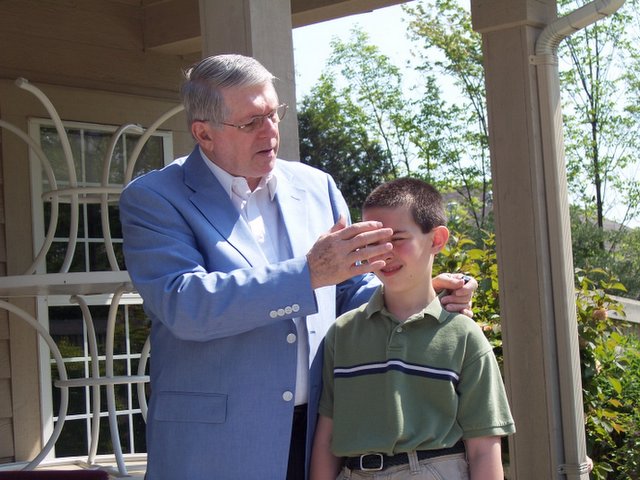

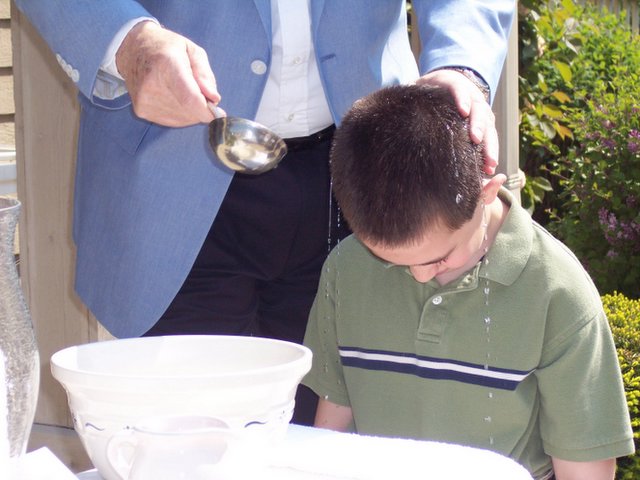
Thanks for God's Work  in Family
The Knispel and Sweeten Families, along with Karen's Mother Hazel Guriel, gather for Mother's Day and Baptism of the Knispel children, Jacob Anderson and Lily Katherine.
The weather was beautiful and the service of baptism even more spectacular. It was great for Papa Sweeten to be able to baptize two of his grandchildren.
 in Family
 The Knispel and Sweeten Families, along with Karen's Mother Hazel Guriel, gather for Mother's Day and Baptism of the Knispel children, Jacob Anderson and Lily Katherine.
The weather was beautiful and the service of baptism even more spectacular. It was great for Papa Sweeten to be able to baptize two of his grandchildren.


Lincoln's 1863 Thanksgiving Proclamation
The year that is drawing towards its close, has been filled with the blessings of fruitful fields and healthful skies. To these bounties, which are so constantly enjoyed that we are prone to forget the source from which they come, others have been added, which are of so extraordinary a nature, that they cannot fail to penetrate and soften even the heart which is habitually insensible to the ever watchful providence of Almighty God.
In the midst of a civil war of unequalled magnitude and severity, which has sometimes seemed to foreign States to invite and to provoke their aggression, peace has been preserved with all nations, order has been maintained, the laws have been respected and obeyed, and harmony has prevailed everywhere in the theatre of the military conflict; while that theatre has been greatly contracted by the advancing armies and navies of the Union.
Needful diversions of wealth and of strength from the fields of peaceful industry to the national defence, have not arrested the plough, the shuttle, or the ship; the axe had enlarged the borders of our settlements, and the mines, as well of iron and coal as of the precious metals, have yielded even more abundantly than heretofore.
Population has steadily increased, notwithstanding the waste that has been made in the camp, the siege and the battle-field; and the country, rejoicing in the consciousness of augmented strength and vigor, is permitted to expect continuance of years with large increase of freedom.
No human counsel hath devised nor hath any mortal hand worked out these great things. They are the gracious gifts of the Most High God, who, while dealing with us in anger for our sins, hath nevertheless remembered mercy.
It has seemed to me fit and proper that they should be solemnly, reverently and gratefully acknowledged as with one heart and voice by the whole American People. I do therefore invite my fellow citizens in every part of the United States, and also those who are at seas and those who are sojourning in foreign lands, to set apart and observe the last Thursday of November next, as a day of Thanksgiving and Praise to our beneficent Father who dwelleth in the Heavens.
And I recommend to them that while offering up the ascriptions justly due to Him for such singular deliverances and blessings, they do also , with humble penitence for our national perverseness and disobedience, comment to his tender care all those who have become widows, orphans, mourners or sufferers in the lamentable civil strife in which we are unavoidably engaged, and fervently implore the interposition of the Almighty Hand to heal the wounds of the nation and to restore it as soon as may be consistent with the Divine purposes to the full enjoyment of peace, harmony, tranquility and Union.
The year that is drawing towards its close, has been filled with the blessings of fruitful fields and healthful skies. To these bounties, which are so constantly enjoyed that we are prone to forget the source from which they come, others have been added, which are of so extraordinary a nature, that they cannot fail to penetrate and soften even the heart which is habitually insensible to the ever watchful providence of Almighty God.
In the midst of a civil war of unequalled magnitude and severity, which has sometimes seemed to foreign States to invite and to provoke their aggression, peace has been preserved with all nations, order has been maintained, the laws have been respected and obeyed, and harmony has prevailed everywhere in the theatre of the military conflict; while that theatre has been greatly contracted by the advancing armies and navies of the Union.
Needful diversions of wealth and of strength from the fields of peaceful industry to the national defence, have not arrested the plough, the shuttle, or the ship; the axe had enlarged the borders of our settlements, and the mines, as well of iron and coal as of the precious metals, have yielded even more abundantly than heretofore.
Population has steadily increased, notwithstanding the waste that has been made in the camp, the siege and the battle-field; and the country, rejoicing in the consciousness of augmented strength and vigor, is permitted to expect continuance of years with large increase of freedom.
No human counsel hath devised nor hath any mortal hand worked out these great things. They are the gracious gifts of the Most High God, who, while dealing with us in anger for our sins, hath nevertheless remembered mercy.
It has seemed to me fit and proper that they should be solemnly, reverently and gratefully acknowledged as with one heart and voice by the whole American People. I do therefore invite my fellow citizens in every part of the United States, and also those who are at seas and those who are sojourning in foreign lands, to set apart and observe the last Thursday of November next, as a day of Thanksgiving and Praise to our beneficent Father who dwelleth in the Heavens.
And I recommend to them that while offering up the ascriptions justly due to Him for such singular deliverances and blessings, they do also , with humble penitence for our national perverseness and disobedience, comment to his tender care all those who have become widows, orphans, mourners or sufferers in the lamentable civil strife in which we are unavoidably engaged, and fervently implore the interposition of the Almighty Hand to heal the wounds of the nation and to restore it as soon as may be consistent with the Divine purposes to the full enjoyment of peace, harmony, tranquility and Union.
Wednesday, November 23, 2005
An Attitude of Gratitude
When we think about the First Thanksgiving it is hard to imagine that some of us would have been grateful for the little we had or would have thanked the Almighty for His blessings. I recently heard a colleague say that America is in an ADD crisis. Adversity Deprivation Disorder is all over the place.
In American we have almost no one who suffers from real adversity so we have to make up was to show faux compassion and empathy. The news media are experts at faux news reports. (Not FOX News) The most recent example is probably how awful it is to be forced to wait in an airport when airplanes are delayed or get stuck in slow traffic on the highways. Those are terrible events! It is just AWFUL to be discomfiture in any slight manner.
Before the traffic rush it was the extreme pain of HIGH GASOLINE PRICES!!! I stopped at Starbucks for a cup of coffee and discovered four V 8 all wheel drive SUV's in the parking lot that were running with the air conditioner on while the drivers were inside chatting and drinking $3.75 lattes themselves.
First, no one in Cincinnati needs an off road, all wheel drive SUV with a V8 engine that gets 10 miles per gallon. Second, to leave it running for 30 minutes to keep the heat down is evidence that the people are NOT concerned about gas prices.
But most importantly, gasoline is cheaper than at almost anytime in my life when figured on an inflationary basis. It is also cheaper than anywhere else in the world. In Europe it is about $7.00 per gallon. Why, then, are the media proffering such ridiculous lies? Anxiety sells. The media must have us jacked up on lies and distortions to keep us watching and reading.
Storms are coming!!!
Gasoline is high!!!
Traffic jams!!!
When we have so little to really worry about we make things up and the media works full time to help us. It is not their fault. We love it, but it facilitates parental paranoia and overprotection of our kids.
Worst of all it robs us of gratitude and thankfulness. So, Abe Lincoln gave us the gift of a formal Thanksgiving Day. Oh, the pessimistic atheists will try to steal it and throw cold water on our celebration but wee can persevere. PETA will show morbid ads about how we are murdering turkeys but switch channels.
Keep on thanking God and each other. Have a blast. Sing a song of praise.
When we think about the First Thanksgiving it is hard to imagine that some of us would have been grateful for the little we had or would have thanked the Almighty for His blessings. I recently heard a colleague say that America is in an ADD crisis. Adversity Deprivation Disorder is all over the place.
In American we have almost no one who suffers from real adversity so we have to make up was to show faux compassion and empathy. The news media are experts at faux news reports. (Not FOX News) The most recent example is probably how awful it is to be forced to wait in an airport when airplanes are delayed or get stuck in slow traffic on the highways. Those are terrible events! It is just AWFUL to be discomfiture in any slight manner.
Before the traffic rush it was the extreme pain of HIGH GASOLINE PRICES!!! I stopped at Starbucks for a cup of coffee and discovered four V 8 all wheel drive SUV's in the parking lot that were running with the air conditioner on while the drivers were inside chatting and drinking $3.75 lattes themselves.
First, no one in Cincinnati needs an off road, all wheel drive SUV with a V8 engine that gets 10 miles per gallon. Second, to leave it running for 30 minutes to keep the heat down is evidence that the people are NOT concerned about gas prices.
But most importantly, gasoline is cheaper than at almost anytime in my life when figured on an inflationary basis. It is also cheaper than anywhere else in the world. In Europe it is about $7.00 per gallon. Why, then, are the media proffering such ridiculous lies? Anxiety sells. The media must have us jacked up on lies and distortions to keep us watching and reading.
Storms are coming!!!
Gasoline is high!!!
Traffic jams!!!
When we have so little to really worry about we make things up and the media works full time to help us. It is not their fault. We love it, but it facilitates parental paranoia and overprotection of our kids.
Worst of all it robs us of gratitude and thankfulness. So, Abe Lincoln gave us the gift of a formal Thanksgiving Day. Oh, the pessimistic atheists will try to steal it and throw cold water on our celebration but wee can persevere. PETA will show morbid ads about how we are murdering turkeys but switch channels.
Keep on thanking God and each other. Have a blast. Sing a song of praise.
Subscribe to:
Posts (Atom)